

In the recent rise of AI-generated content plaguing our art, our jobs, and the entire internet, the music industry is far from being a stranger to its grasp. As Artificial Intelligence seems to grow bigger and more persistent by the day, and becomes capable of doing more than creating bizarre images of people with mangled faces and additional fingers, many in the creative industry have become afraid of their hours of work being cast aside in favour of prompts generated in seconds.
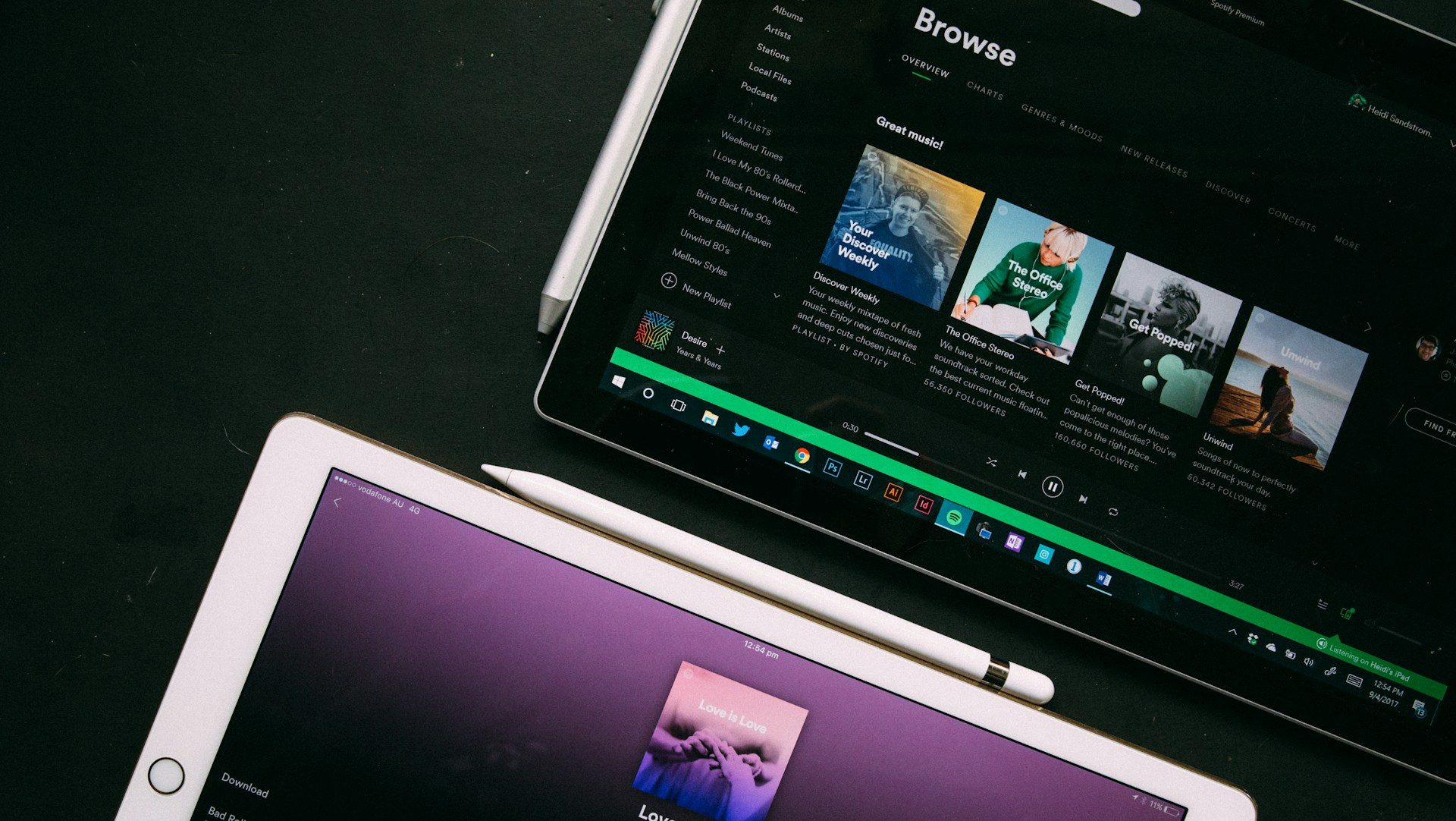
This fear is not encapsulated more by many Spotify users’ suggested playlists being consumed by music with questionable album art, bland lyrics, and perfectly autotuned voices. Musicians with AI-generated descriptions and AI-generated profile pictures, somehow trying to create AI-generated emotions. Spotify has bloated the prevalence of these ‘artists’ all over the app, and outrage has sparked over the company’s failure to identify them as artificial. One of the most infamous of these profiles is the ‘band’ “The Velvet Sundown”, which described itself as “a synthetic music project guided by human creative direction”.

The band, which gained 1 million listens on Spotify before revealing their entire brand was completely AI-generated, sparked many users to call for the clear labelling of artists solely generated by AI. Along with this, many high-profile artists such as Sir Paul McCartney and Billie Eilish have spoken out against AI companies training generative AI tools on their music without payment or permission. Spotify said it would make sure artists, songwriters and rights holders were “properly compensated for uses of their work and transparently credited for their contributions”, however thousands of unconvinced users and artists have taken to boycotting the company in favour of other streaming sites such as Deezer and Tidal, as well as harnessing the recent comeback of physical media.
Other artists than “The Velvet Sundown” have also gained traction on Spotify, such as “Sienna Rose” and “Breaking Rust”, both of which have over two million oblivious monthly listeners.


Whether you’re a casual listener or a budding artist aspiring to make it big in the industry, this can be scary. Despite this terrifying new development regarding careers in the music industry, it is important to keep listening to and supporting human-made music. The best way to avoid the influx of AI music on Spotify is to curate your own playlists rather than letting the algorithm create mixes for you, especially as AI will only grow in competence and make it more difficult to tell the authentic from the artificial.
“Good music comes from an organic place, a truthful place. AI is neither organic nor truthful. It is tech designed to help us compose, record, mix and master. Don’t get it twisted – it’s not the whole package. You are.” – Jules Brookes
For creators, this perspective is key. Rather than fearing AI, use it as a tool to inspire creativity, helping you brainstorm, break writer’s block, or explore new sounds. At the end of the day, music isn’t just sound, it’s feeling. The soul of music lies in its imperfections, the breaths, the moments that make it real. As long as artists hold onto that, AI will stay what it’s meant to be: a tool, not a rival.
Related Blogs

How to Make Your Drops Hit Harder: Tips for EDM Producers

Start Your Course in April 2026 at pointblank music school!

Explore our London Open Day or Los Angeles Open House
The post The Rise of AI Music on Spotify appeared first on pointblank Music School's Blog.