
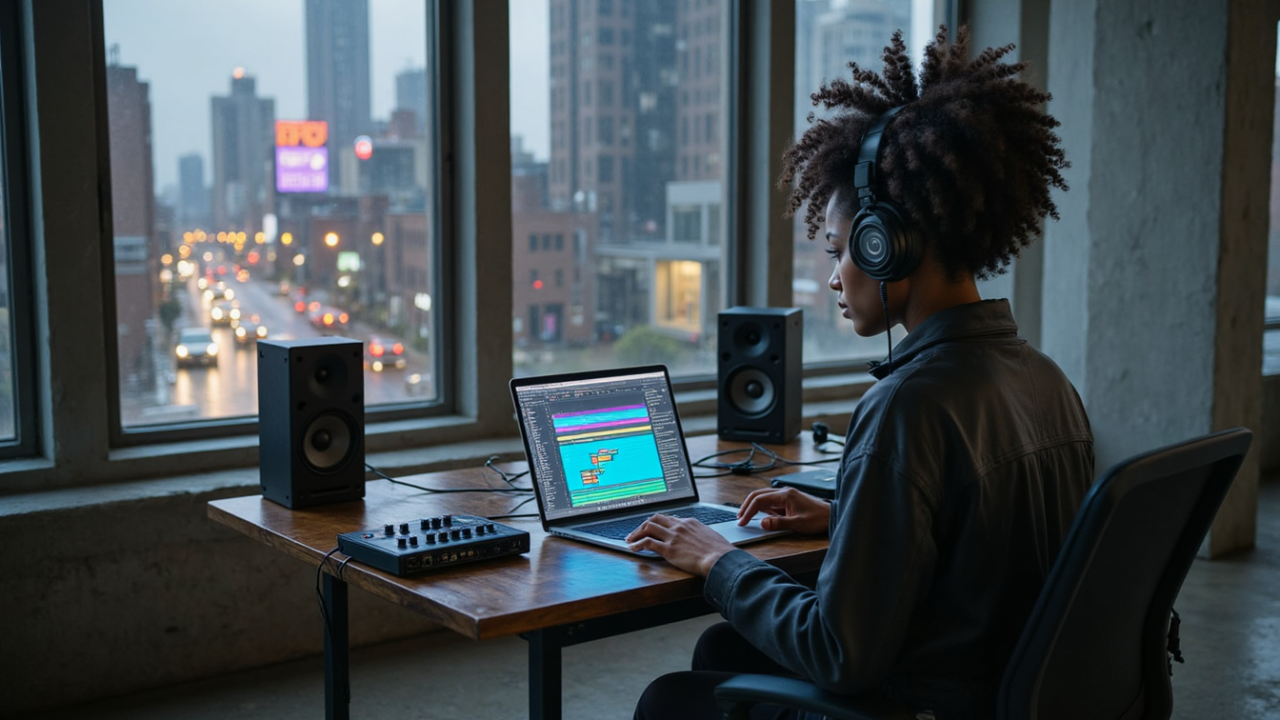

Three DAWs. Three Different Jobs.
“The best tool is the one that disappears while you work.”
The biggest mistake is choosing a DAW because someone called it “the industry standard.”
Or because your favourite producer uses it.
Or because it comes with the most plugins.
Pro Tools, Logic Pro, and Ableton Live can all record, edit, mix, and finish professional music.
But they were shaped by different priorities.
Pro Tools thinks like a recording studio.
Logic thinks like a songwriter’s complete production room.
Ableton Live thinks like an instrument.
The best DAW is not the one with the longest feature list.
It is the one that matches the way you make music.
Quick Summary
👉 Choose Pro Tools if you want to become a serious audio engineer, record and edit musicians, work in commercial studios, or exchange complete sessions with other professionals. Choose Logic Pro if you use a Mac and want an affordable all-in-one system for songwriting, MIDI, virtual instruments, recording, and mixing. Choose Ableton Live if you create electronic music, build songs from loops and samples, experiment quickly, or perform live.
Pro Tools was built around professional recording.
Its strongest areas include:
- Recording musicians
- Editing audio
- Comping performances
- Mixing
- Post-production
- Session interchange
- Large studio workflows
Its timeline feels precise.
Its mixer feels familiar to engineers.
Its editing tools encourage careful control over recorded sound.
Pro Tools is often the safest choice when your work needs to move between:
- Recording studios
- Mix engineers
- Editors
- Film and television facilities
- Producers working on different systems
That compatibility is not glamorous.
But professionally…
It matters.
Pro Tools is designed for projects that need to travel.
Pro Tools Intro vs Artist for Beginners 🎚️
Logic Pro is built around the individual music creator.
It combines:
- Songwriting
- MIDI sequencing
- Audio recording
- Virtual instruments
- Loop-based production
- Mixing
- Mastering assistance
Apple describes Logic Pro as a complete collection of tools for songwriting, beat-making, editing, and mixing, supported by a large library of instruments, effects, loops, and samples.
Logic does not begin with the assumption that you are operating a commercial recording studio.
It assumes you may be:
- The songwriter
- The musician
- The programmer
- The engineer
- The mixer
- The producer
Sometimes all in the same afternoon.
Logic Pro is designed for one person making an entire record.
Pro Tools vs. Logic Pro: What’s the Difference?
Ableton Live began with a different question:
What if music software could behave like an instrument?
Its Session View allows you to launch clips, loops, patterns, and musical ideas without immediately placing everything on a traditional timeline.
That makes Live especially powerful for:
- Electronic music
- Beatmaking
- Sampling
- Improvisation
- Sound design
- Loop-based composition
- Live performance
You can experiment first…
Then capture the performance into Arrangement View and turn it into a finished song.
Pro Tools records the performance.
Logic builds the song.
Ableton Live lets you perform the production.
Ableton Live Intro vs Standard vs Suite 💻
Your producer type matters more than the genre printed on your playlist.
Let’s simplify the decision.
You record:
- Bands
- Drums
- Vocals
- Guitars
- Acoustic instruments
- Large sessions
You care about:
- Editing speed
- Take management
- Session organization
- Routing
- Studio compatibility
- Deliverables
Best Choice: Pro Tools
Pro Tools is built for this environment.
It is especially valuable when you need to send a session to another engineer without rebuilding the production from exported stems.
You begin with:
- Chords
- Lyrics
- Piano
- Guitar
- MIDI instruments
- Drum programming
You want one application containing almost everything needed to finish the song.
Best Choice: Logic Pro
Logic provides a deep collection of instruments, effects, loops, samplers, Session Players, Flex Pitch, Flex Time, Live Loops, and mixing tools for one purchase.
It is particularly strong for producers who want to move between real recordings and virtual instruments without changing environments.
You begin with:
- Drum patterns
- Samples
- Synthesizers
- Loops
- Automation
- Sound experiments
You want to create quickly and rearrange ideas without interrupting the flow.
Best Choice: Ableton Live
Session View, audio warping, instrument racks, effect racks, MIDI tools, automation, sampling, and Max for Live make it one of the most flexible environments for electronic production.
You receive sessions from other artists and producers.
You spend most of your time:
- Editing
- Routing
- Balancing
- Automating
- Printing mixes
- Creating deliverables
Best Choice: Pro Tools
Logic and Ableton can both mix professionally.
But Pro Tools remains the most practical choice when compatibility with commercial studios and outside engineers is central to your work.
You write, record, produce, and mix your own music.
You rarely send the original DAW project to a major studio.
You may only exchange:
- WAV files
- Stems
- Reference mixes
- MIDI files
Best Choice: Logic Pro or Ableton Live
Choose Logic if the song usually begins with composition.
Choose Ableton if it usually begins with experimentation.
You work with:
- Dialogue
- Sound effects
- Picture
- Timecode
- Large edit sessions
- Broadcast or film deliverables
Best Choice: Pro Tools
Pro Tools is designed around the precision, routing, interchange, and session scale expected in professional post-production.
You want to trigger:
- Backing tracks
- Loops
- Effects
- Instruments
- Scenes
- Tempo changes
Best Choice: Ableton Live
The software was designed not only to create music…
But to perform it.
The smartest way to choose a DAW is not to read another comparison.
It is to finish a small song in each one.
Fortunately, all three offer a way to begin without immediately buying the full software.
Logic Pro Free Trial
Apple offers a 90-day Logic Pro trial for Mac. UPDATE: It looks like Logic has now rolled back the 90-day Free Trial to a 30-Day Free Trial, and worse than that, it’s bundled as a subscription. Could this be the death of Logic? We will see.
That is unusually generous.
Three months gives you enough time to:
- Learn the interface
- Record a song
- Program MIDI
- Try the included instruments
- Mix a project
- Discover whether the workflow feels natural
The trial is the complete application rather than a small introductory edition.
Ableton Live Free Trial
Ableton offers a 30-day trial of Live 12 Suite for Mac and Windows.
No credit card is required.
Because it is the Suite edition, you can explore:
- The full instrument collection
- All included audio effects
- Max for Live
- The expanded sound library
- Advanced MIDI tools
Thirty days is shorter than Logic’s trial.
But it is enough time to make several focused projects.
Pro Tools Intro
Pro Tools Intro is not a timed trial.
It is a free version of Pro Tools that includes the essential audio and MIDI workflow, along with a smaller collection of effects and virtual instruments.
Avid describes Intro as free indefinitely, rather than something that expires after a few weeks.
This makes it useful for:
- Learning the Pro Tools interface
- Editing basic sessions
- Recording small projects
- Opening compatible Pro Tools sessions
- Deciding whether to move to Artist or Studio
The limitations are more significant than a full-featured trial.
But there is no deadline.
Logic Pro has the simplest pricing structure.
Logic Pro for Mac
$199.99 USD as a one-time purchase. **UPDATE: If you can still find it. Otherwise it’s now part of a subscription Apple Creator Studio $179 CAD per year – giving Adobe “pay us forever” vibes. 👎
You receive the complete Mac application with its instruments, effects, loops, samples, recording tools, MIDI tools, audio editing, and mixing features.
There is no Logic Intro, Standard, and Suite ladder on the Mac.
You buy Logic…
And you get Logic.
Why Logic Is (used to be) Such Strong Value
For one purchase, it includes:
- Software instruments
- Drum production tools
- Samplers
- Guitar and bass processing
- Pitch and timing correction
- Session Players
- Stem Splitter
- Mastering Assistant
- Loops and samples
- Audio effects
Many producers can make complete records without immediately purchasing a large third-party plugin collection.
Ableton Live comes in three main editions.
Live 12 Intro
$99 USD
Includes:
- 16 audio and MIDI tracks
- 8 software instruments
- 27 audio effects
- 12 MIDI effects
- 4 Packs
- More than 5 GB of sounds
Best For
- Beginners
- Small electronic projects
- Learning Live
- Simple performance rigs
The 16-track limit is the main restriction.
Live 12 Standard
$349 USD
Includes:
- Unlimited audio and MIDI tracks
- 13 software instruments
- 42 audio effects
- 13 MIDI effects
- 14 MIDI tools
- 16 Packs
- More than 38 GB of sounds
Best For
- Serious independent producers
- Sampling
- Recording and arranging
- Electronic music
- Producers who already own third-party instruments
Standard provides most of Live’s central workflow without the full Suite library.
Live 12 Suite
$749 USD
Includes:
- Unlimited audio and MIDI tracks
- 20 software instruments
- 58 audio effects
- 14 MIDI effects
- 14 MIDI tools
- 33 Packs
- More than 71 GB of sounds
- Max for Live
Best For
- Professional electronic producers
- Sound designers
- Live performers
- Producers who want the complete Ableton environment
- People who want to build or customize devices with Max for Live
Ableton Rent-to-Own
Ableton also offers rent-to-own for Live 12 Suite.
The current listed payment is $31.21 per month, with the payments contributing toward ownership rather than continuing forever as a subscription.
After the required payments are completed, the license belongs to you.
Pro Tools has the most complex pricing system of the three.
It offers:
- A free edition
- Multiple paid tiers
- Subscription options
- Perpetual-license options
Exact promotions and purchase routes can change, so always check Avid before buying.
Pro Tools Intro
Free
Includes the core Pro Tools experience with limitations on session size and included content.
Best For
- Learning Pro Tools
- Small recording projects
- Basic editing
- Students exploring professional audio
Pro Tools Artist
$99 USD per year on the annual subscription currently listed by Avid.
Artist is designed for musicians, songwriters, and producers who want the Pro Tools workflow without the larger capacities required by commercial studios.
Best For
- Individual musicians
- Songwriters
- Small recording projects
- Producers entering the Pro Tools ecosystem
Pro Tools Studio
$299 USD per year on the annual subscription currently listed by Avid.
Studio is the edition most independent recording and mix engineers should consider.
It provides larger sessions and more professional mixing, surround, and workflow capabilities than Artist.
Best For
- Recording engineers
- Mix engineers
- Commercial music production
- Larger sessions
- Professional studio compatibility
Pro Tools Ultimate
Ultimate is designed for the largest professional music and post-production environments.
It expands track capacity, advanced audio workflows, immersive mixing, and integration with high-end Avid systems.
Best For
- Film and television
- Major commercial studios
- Large post-production facilities
- Advanced immersive workflows
Most independent music producers do not need Ultimate.
⭐️ Download my Free Music Production Guides or take my free Ableton Live Course ⭐️
That depends on what you mean by “most.”
Logic Pro Includes the Most for the Price
Logic provides an enormous instrument, effect, loop, and sample library for $199.99.
It is difficult to beat as an all-in-one value.
Ableton Live Suite Includes the Most Experimental Possibility
Suite costs considerably more.
But it includes:
- Deep sampling tools
- Synthesizers
- Creative effects
- Generative MIDI tools
- Max for Live
- A large sound library
Its value is not just the quantity of devices.
It is how easily they can be connected and transformed.
Pro Tools Includes the Professional Workflow
Pro Tools may not appear as generous when you compare only instruments and loops.
But that misses its purpose.
You are paying for:
- Editing speed
- Studio familiarity
- Session compatibility
- Professional recording workflows
- Post-production capability
- Integration with the wider Avid ecosystem
Logic gives you a complete music room.
Ableton gives you a creative laboratory.
Pro Tools gives you a professional facility language.
Pro Tools
Best for:
- Large multitrack recording
- Detailed audio editing
- Vocal comping
- Band sessions
- Commercial studios
Pro Tools feels designed around recorded performances.
Logic Pro
Best for:
- Singer-songwriters
- Solo artists
- Project studios
- Hybrid audio and MIDI productions
Logic has excellent recording and comping tools.
For many individual musicians, it provides all the audio capability they need.
Ableton Live
Best for:
- Capturing ideas quickly
- Loop recording
- Manipulating audio
- Warping performances
- Experimental arrangement
Live can record full bands.
But traditional studio recording is not the reason most people choose it.
Logic Pro
Logic offers one of the deepest traditional MIDI environments.
It suits producers who think in:
- Chords
- Notes
- Scores
- Arrangements
- Instrument parts
- Song sections
It also includes a large virtual-instrument collection.
Audio vs MIDI: What’s the difference?
Ableton Live
Ableton’s MIDI workflow is more experimental.
Live 12 includes tools for generating and transforming rhythms, chords, melodies, articulations, and note patterns. Standard and Suite include the expanded set of MIDI tools, while Suite adds Max for Live.
It is ideal for producers who want MIDI to create surprises.
Pro Tools
Pro Tools supports MIDI and virtual instruments.
You can write and produce complete electronic music inside it.
But compared with Logic and Ableton, MIDI is not its clearest competitive advantage.
Pro Tools is strongest when the project becomes audio.
This is where Pro Tools separates itself.
Imagine recording drums in one studio.
Editing vocals at home.
Sending the project to a mix engineer.
Then opening the final session at another facility.
When everyone uses Pro Tools, the complete session can travel with:
- Tracks
- Edits
- Playlists
- Markers
- Routing
- Automation
- Compatible plugins
That can save time.
It can also prevent translation errors.
Does This Mean Logic and Ableton Are Unprofessional?
No.
Logic and Ableton are used to make major records every day.
But many Logic and Ableton producers work independently.
When collaborating with outside studios, they often exchange:
- Consolidated audio
- Stems
- MIDI
- Reference mixes
- AAF files
That is completely normal.
The difference is that Pro Tools session compatibility is often part of the professional workflow itself.
You do not need Pro Tools to make professional music.
You may need Pro Tools to participate efficiently in certain professional systems.
It is tempting to say:
- Pro Tools is for rock.
- Logic is for pop.
- Ableton is for electronic music.
That is too simple.
You can make any genre in any DAW.
But genres often suggest certain workflows.
Rock, Country, Jazz, and Live Bands
These styles frequently involve:
- Real musicians
- Multitrack recording
- Comping
- Editing
- Studio collaboration
Strong Choice
Pro Tools
Logic is also excellent for independent band production.
Pop and Singer-Songwriter Music
These productions often combine:
- Vocals
- MIDI instruments
- Live recordings
- Programming
- Detailed arrangements
Strong Choice
Logic Pro
Pro Tools becomes attractive when professional studio collaboration increases.
Electronic Music, House, Techno, Ambient, and Experimental Music
These styles often involve:
- Loops
- Samples
- Synthesizers
- Automation
- Improvisation
- Sound design
Strong Choice
Ableton Live
Hip-Hop and Beatmaking
Both Logic and Ableton are excellent.
Choose Logic If
You prefer traditional sequencing and a large included library.
Choose Ableton If
You prefer sampling, warping, racks, looping, and fast experimentation.
Pros
- Strong professional studio compatibility
- Excellent audio editing
- Excellent recording workflow
- Widely understood by engineers
- Strong for mixing and post-production
- Free Intro edition available
Cons
- More complex pricing
- Less generous included instrument library than Logic
- Not as immediate for experimental electronic creation
- Professional features may exceed what a solo producer needs
Pros
- Excellent value
- One-time purchase
- 90-day trial
- Huge collection of instruments and effects
- Strong MIDI and audio tools
- Excellent for songwriting
- Complete production environment
Cons
- Mac only
- Less common as a commercial-studio session format
- Large feature set can feel overwhelming
- Not designed primarily as a live-performance instrument
Pros
- Fast, creative workflow
- Excellent for electronic music
- Session View
- Powerful sampling and warping
- Excellent automation and modulation
- Strong live-performance tools
- 30-day Suite trial
- Mac and Windows support
Cons
- Suite is expensive
- Traditional recording can feel less natural than Pro Tools
- Intro has a 16-track limit
- Full projects are less likely to be exchanged with major studios
Choose Pro Tools If
You want to become:
- A recording engineer
- A mix engineer
- A dialogue editor
- A post-production professional
- A commercial studio assistant
Or you regularly need to exchange full sessions with professional studios.
Choose Logic Pro If
You are:
- A songwriter
- A singer-songwriter
- A composer
- A pop producer
- A solo musician
- A Mac user who wants maximum value
And you want one application that includes almost everything.
Choose Ableton Live If
You are:
- An electronic producer
- A beatmaker
- A sampler
- A live performer
- A sound designer
- An experimental musician
And you want the DAW itself to feel like a creative instrument.
Do not choose based only on screenshots.
Try making the same three projects in each DAW.
Project 1: Record a Song
Record:
- One vocal
- One instrument
- Several takes
- A basic mix
Project 2: Produce With MIDI
Create:
- Drums
- Bass
- Chords
- Melody
- Automation
Project 3: Finish and Export
Complete:
- Arrangement
- Edits
- Mix
- WAV
- MP3
- Organized project folder
Then ask:
- Which DAW made decisions feel easiest?
- Which one encouraged me to finish?
- Which one made me want to begin another song?
That is your answer.
Which DAW is best for beginners?
Logic Pro is often the strongest all-in-one choice for Mac users. Ableton Live Intro is a good starting point for electronic producers. Pro Tools Intro is best for beginners specifically interested in professional recording and editing workflows.
Is Pro Tools better than Logic Pro?
Pro Tools is generally stronger for commercial-studio compatibility, detailed audio editing, and professional recording workflows. Logic offers more instruments and production tools for a much lower one-time price.
Is Ableton better than Logic for electronic music?
Ableton Live often feels faster for loop-based production, sampling, improvisation, modulation, and live performance. Logic may suit electronic producers who prefer traditional arranging and a larger included library for the price.
Can Logic Pro be used professionally?
Yes. Logic Pro is a professional DAW used for songwriting, recording, production, composition, and mixing. It is less common than Pro Tools as the native session format exchanged between major commercial studios.
Can Ableton Live record a band?
Yes. Ableton supports multitrack audio recording, comping, editing, routing, and mixing. However, engineers focused mainly on traditional recording sessions may find Pro Tools more natural.
Is Pro Tools only for audio engineers?
No. Musicians and producers can compose with MIDI and virtual instruments inside Pro Tools. Its greatest advantages simply become more obvious in recording, editing, mixing, collaboration, and post-production.
How long is the Logic Pro trial?
Logic Pro for Mac has a 90-day free trial.
How long is the Ableton Live trial?
Ableton offers the full Live 12 Suite for 30 days.
Is there a free version of Pro Tools?
Yes. Pro Tools Intro is free and does not use a short trial deadline.
Which DAW is the best value?
For Mac users, Logic Pro is extremely difficult to beat at $199.99 because it includes the full application and a large production library.
Pro Tools, Logic, and Ableton Live are not three versions of the same idea.
They represent three different production identities.
Pro Tools says:
Capture it precisely.
Logic says:
Build the complete song.
Ableton Live says:
Play with the possibilities.
Choose Pro Tools when compatibility and engineering matter most.
Choose Logic when you want one complete studio for writing and producing.
Choose Ableton when experimentation is part of the performance.
But remember:
The DAW does not finish the music.
You do.
The best DAW is the one that helps you make decisions…
And finish another song.
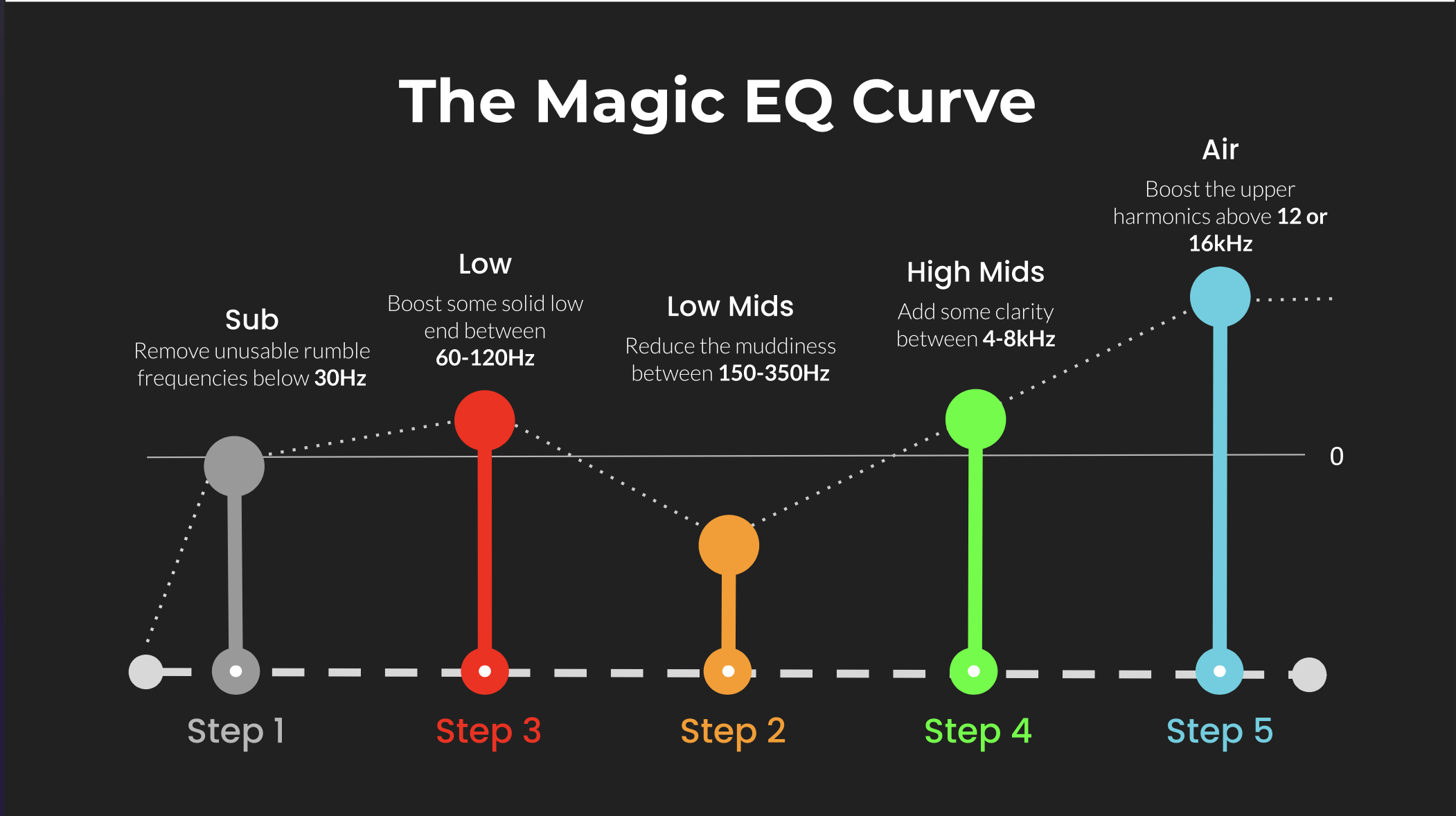 ⭐️ Download my Free Magic EQ settings Guide ⭐️

⭐️ Download my Free Magic Reverb settings Guide ⭐️
#protools #daw #homestudio #recordingschool #recording #musicproduction
Also read:
How to Start Your Own Online Business Teaching Music

Hey, I’m Futch – Music Production Coach and Ableton Certified Trainer

Learn how to make your first song and beat in Ableton Live with my
FREE 90-minute Ableton Live course
I’ve been teaching audio engineering and music production for 35 years.⭐️
Check out my new online music production program: Music Production Ninja…