



Faster Is Not the Same as Better
“The future is already here—it’s just not evenly distributed.”
— William Gibson
Music production has always changed alongside technology.
Tape made recording possible.
MIDI made instruments editable.
Digital audio made unlimited revisions possible.
Now AI is changing the speed of production.
It can remove noise from a vocal.
Separate a finished song into stems.
Identify notes inside an audio recording.
Suggest an EQ curve.
Build a starting point for a master.
Tasks that once took hours can sometimes happen in seconds.
But speed is not the final goal.
The goal is to spend less time repairing problems…
And more time making creative decisions.
Brave New Worlds: The Future of Music Production in 2030
Quick Summary
👉 The best AI music production tools include iZotope RX for audio repair, Steinberg SpectraLayers and RipX DAW for advanced stem separation, Moises for fast and accessible stem extraction, Accentize dxRevive Pro and Adobe Enhance Speech for dialogue restoration, Melodyne and Synchro Arts RePitch for vocal editing, sonible smart:EQ for intelligent mixing assistance, and iZotope Ozone for AI-assisted mastering.
AI music tools analyze patterns.
They may recognize:
- A human voice
- A bass instrument
- A drum transient
- Background noise
- Musical notes
- Tonal balance
- Dynamic range
- Stereo width
Then they use that analysis to perform or suggest an action.
For example:
- Separate vocals from a finished mix
- Identify unwanted noise
- Correct the pitch of a vocal
- Suggest an EQ curve
- Match a mastering reference
- Convert a melody into MIDI
The producer still decides whether the result serves the song.
AI can make a decision faster.
The Producer must decide whether it is the right decision.
AI is most valuable when the task is:
- Repetitive
- Analytical
- Corrective
- Difficult to perform manually
- Easy to review afterward
The best current applications include:
- Noise reduction
- Audio restoration
- Stem separation
- Vocal tuning
- Vocal alignment
- Intelligent EQ and compression
- Mastering assistance
- Audio-to-MIDI conversion
- Transcription and tempo detection
- Generating temporary creative material
Let’s look at the most useful tools in each category.
iZotope RX has become one of the most widely used audio restoration systems in music, film, television, podcasts, and forensic cleanup.
It can help repair:
- Background noise
- Electrical hum
- Clipping
- Mouth clicks
- Plosives
- Reverb
- Distortion
- Guitar noise
- Vocal bleed
RX Advanced includes AI-powered tools for dialogue isolation, background-noise removal, and audio cleanup. Its Music Rebalance system can also change or isolate the levels of vocals, bass, percussion, and other musical elements inside a finished mix.
Why RX Is So Useful
Imagine recording the perfect vocal performance…
Then discovering:
- A fan was running
- A phone vibrated
- The singer clicked their tongue
- The preamp clipped
- The room sounded terrible
Traditionally, you might have needed to rerecord the performance.
RX may allow you to rescue it.
RX is Photoshop for damaged audio.
Best For
- Music producers
- Dialogue editors
- Podcast producers
- Recording engineers
- Film and television audio
- Restoring old recordings
Most DAWs show sound as a waveform.
SpectraLayers displays sound as a visual spectrum.
You can see:
- Frequencies
- Harmonics
- Noise
- Instruments
- Transients
- Vocal energy
Then you can select and edit audio almost like working with layers in an image editor.
SpectraLayers 12 can separate a complete song into vocals, drums, bass, guitar, piano, saxophone and brass, and an additional “other” layer. It also includes specialized tools for unmixing drums, noisy speech, instruments, and complete soundtracks.
Why SpectraLayers Is Different
Basic stem separators give you several audio files.
SpectraLayers gives you a workspace for refining them.
You can:
- Remove leakage
- Move sounds between layers
- Repair separation artifacts
- Isolate specific instruments
- Select individual spectral details
Stem separation pulls the ingredients apart.
Spectral editing lets you clean up the pieces.
Best For
- Remixing
- Restoration
- Post-production
- Sound design
- Removing bleed
- Detailed audio repair
- Producers who enjoy visual editing
RipX goes beyond traditional stem extraction.
It analyzes the notes inside audio and presents them in an editable environment.
You can separate a song…
Then change individual notes within the separated material.
RipX offers six or more stems, note-level audio extraction, harmonic editing, stem cleanup, repair tools, and the ability to replace or reshape sounds.
What Can You Do With It?
You can potentially:
- Change a note inside a sample
- Isolate an instrument
- Retune a phrase
- Remove a sound
- Rearrange extracted notes
- Build an instrument from a sound
- Adapt a loop to a new song
It sits somewhere between:
- A DAW
- A stem separator
- Melodyne
- A spectral editor
RipX treats recorded audio less like tape…
And more like musical information.
Best For
- Remix producers
- Sampling
- Experimental production
- Sound design
- Reworking loops
- Producers who want deep control over separated stems
Moises makes stem separation simple.
Upload a song…
Then separate or mute elements such as:
- Vocals
- Drums
- Bass
- Guitar
- Other instruments
It also includes tools for changing tempo, detecting chords, creating practice tracks, and mastering music. Its professional separation options support lossless WAV export at up to 48 kHz and 24-bit resolution.
Why Musicians Love It
Moises is less technical than SpectraLayers or RipX.
You don’t need to understand spectral editing.
You can quickly create:
- An instrumental version
- A vocal-only track
- A drumless practice track
- A bass practice mix
- A rough remix
- A reference for transcription
Best For
- Musicians learning songs
- Music teachers
- Singers
- DJs
- Beginner remixers
- Producers who need stems quickly
For better results, Moises recommends uploading high-quality uncompressed files such as WAV or FLAC instead of compressed MP3 files.
Sometimes noise reduction is not enough.
Removing noise may leave a voice sounding:
- Thin
- Metallic
- Distant
- Artificial
- Incomplete
Accentize dxRevive is designed to reconstruct damaged speech and restore missing vocal information.
It can help repair:
- Poor microphone recordings
- Codec artifacts
- Phone audio
- Clipped dialogue
- Band-limited recordings
- Distant voices
- Thin or harsh speech
Accentize describes dxRevive Pro as a neural speech-restoration system that restores missing information and natural vocal characteristics rather than merely reducing background noise.
Why This Matters
Traditional cleanup asks:
“What should we remove?”
dxRevive also asks:
“What is missing?”
That makes it especially useful when the original recording is damaged.
Best For
- Dialogue editors
- Film production
- Interviews
- Documentary audio
- Remote recordings
- Voiceovers
- Poorly recorded production sound
Adobe Enhance Speech is designed for speed.
Upload spoken audio…
And the system attempts to make it sound as though it were recorded in a professional environment.
It can reduce:
- Background noise
- Room reverb
- Distant microphone sound
- Chatter
- Background music
It also improves speech clarity and lets users adjust the balance between the enhanced voice and the original environment.
Why It Is Useful
Not every project needs a complex restoration session.
Sometimes you just need to improve:
- A podcast
- A Zoom recording
- A social-media video
- A voice memo
- An interview
- A course lesson
Enhance Speech can provide a strong result without requiring advanced audio-engineering knowledge.
The Limitation
Aggressive processing can sometimes make a voice sound:
- Overprocessed
- Synthetic
- Too dry
- Unlike the original speaker
Use the mix control.
Listen carefully.
More processing is not always better.
** I want to remind everyone that Adobe, IMO, is the company that popularized and normalized the dreaded subscription model so please only use their free products. Maybe one day everything will go back to normal and we won’t have to pay for products forever.
⭐️ Download my Free Music Production Guides or take my free Ableton Live Course ⭐️
Melodyne analyzes audio musically.
Instead of showing only a waveform, it identifies:
- Notes
- Pitch
- Timing
- Vibrato
- Formants
- Dynamics
- Chords
- Scales
You can then edit a performance note by note.
Melodyne can work with vocals, drums, instruments, and—in the Editor and Studio editions—polyphonic sources such as piano and guitar. Some editions can also export detected notes as MIDI.
Why Melodyne Is More Than Auto-Tune
Auto-Tune-style processing can correct pitch automatically.
Melodyne lets you examine the performance.
You decide:
- Which notes need correction
- How far to move them
- Whether to preserve vibrato
- Whether to adjust timing
- Whether a note should remain imperfect
The goal is not to remove the human performance.
The goal is to protect it from distracting mistakes.
Best For
- Vocal tuning
- Vocal timing
- Harmony editing
- Instrument correction
- Audio-to-MIDI
- Sample manipulation
- Professional vocal production
Synchro Arts RePitch is designed for detailed vocal correction.
It can edit:
- Pitch
- Timing
- Vibrato
- Formants
- Pitch curves
It emphasizes transparent correction while allowing producers to maintain control over the natural movement of a vocal performance.
Why It Is Useful
Vocal tuning often involves two opposite goals:
- Correct the distracting notes.
- Preserve the singer’s identity.
RePitch gives producers a visual environment for balancing those goals.
It becomes especially powerful in a professional vocal workflow alongside Synchro Arts VocAlign, where pitch correction and timing alignment can work together.
Best For
- Lead-vocal tuning
- Pop vocals
- Layered harmonies
- Transparent correction
- Fast professional vocal editing
EQ can be difficult because a producer must decide:
- Which frequencies are causing the problem
- Whether they are always problematic
- How much correction is necessary
- Which instrument should take priority
sonible smart:EQ 4 analyzes audio and creates a suggested spectral correction designed to improve tonal balance. It can also manage masking relationships between as many as ten tracks.
What Does That Mean?
Imagine the vocal and guitar are competing.
A traditional EQ only sees the track it is processing.
smart:EQ can examine the relationship between multiple tracks and help create room for the most important element.
Traditional EQ shapes a track.
Intelligent EQ can examine the conversation between tracks.
Best For
- Beginner mixers
- Fast tonal balancing
- Reducing frequency masking
- Corrective EQ
- Creating a starting point
- Producers working under deadlines
Mastering requires you to evaluate:
- Tonal balance
- Loudness
- Dynamics
- Stereo width
- Vocal level
- Translation
Ozone’s Master Assistant analyzes a track and creates a suggested mastering chain.
Ozone 12 can use genre targets or a reference track to develop recommendations for tone, dynamics, width, and loudness. It also allows the producer to customize the processing and adjust the suggested result.
Why This Is Valuable
Ozone can create:
- A fast demo master
- A client reference
- A starting point
- A second opinion
- A loudness comparison
- A tonal-balance check
It can also reveal problems.
If Master Assistant needs an extreme EQ curve to reach the target…
The real problem may be in the mix.
AI mastering is most useful as a mirror.
It shows you what the mix may be missing.
Best For
- Independent producers
- Demo masters
- Single releases
- Learning mastering
- Checking tonal balance
- Creating a strong starting point
Ozone does not replace the judgment, quality control, sequencing, metadata work, or communication offered by an experienced mastering engineer. Even iZotope presents Master Assistant as a fast production aid rather than a complete replacement for professional mastering.
Basic Pitch is an open-source audio-to-MIDI system created by Spotify.
**It’s also my 2026 favourite product name** 💅
It can detect musical notes and pitch bends inside an audio recording, then convert that information into MIDI.
Possible Uses
You could:
- Sing a melody and convert it to MIDI
- Extract notes from an instrument recording
- Transcribe a simple musical phrase
- Create a starting point for notation
- Replace a recorded idea with a virtual instrument
The result may still require editing.
Complex arrangements can confuse audio-to-MIDI systems.
But for simple melodies, bass lines, and individual instruments…
It can save a large amount of time.
Generative tools can create:
- Song ideas
- Lyrics
- Chord progressions
- Instrumental sketches
- Vocal concepts
- Arrangement references
- Temporary soundtracks
These tools can be useful during pre-production.
For example, you might generate:
- A temporary song for a video edit
- A reference arrangement
- A rough genre demonstration
- A placeholder vocal
- An example for a client
But there is an important difference between:
Generating music
and:
Producing music
Generating gives you material.
Producing requires intention.
Selection.
Editing.
Arrangement.
Performance.
Context.
Taste.
AI can generate possibilities.
The Producer creates meaning.
Noise Reduction and Audio Repair
Best overall: iZotope RX
Best for damaged dialogue: Accentize dxRevive Pro
Best simple option: Adobe Enhance Speech
Stem Separation
Best for deep editing: Steinberg SpectraLayers Pro
Best for note-level manipulation: RipX DAW Pro
Best for speed and accessibility: Moises
Vocal Production
Best detailed editor: Melodyne
Best fast transparent tuning: Synchro Arts RePitch
Mixing
Best intelligent EQ assistant: sonible smart:EQ 4
Mastering
Best AI-assisted mastering suite: iZotope Ozone
Audio-to-MIDI
Best free option: Spotify Basic Pitch
AI can analyze audio.
But it does not fully understand why the music matters.
It may not know:
- Which mistake gives the performance character
- Whether the vocal should feel vulnerable
- Why the chorus needs to be smaller
- Whether the snare should sound ugly
- When perfect timing damages the groove
- Which strange sound becomes the hook
AI tends to recognize patterns based on previous examples.
Artists sometimes succeed by breaking those patterns.
The best workflow is not:
- Press a button.
- Accept everything.
- Export the song.
A stronger workflow is:
- Identify the problem.
- Let the tool analyze it.
- Listen to the suggestion.
- Adjust the result.
- Compare it with the original.
- Keep only what improves the music.
Let AI perform the calculation.
Never outsource the conclusion.
AI processing often makes audio louder.
Louder usually sounds better at first.
This can trick you into believing that:
- The EQ is clearer
- The master is better
- The vocal is stronger
- The mix is more exciting
Level-match the processed and unprocessed versions.
Then listen again.
The real question is not:
“Is it louder?”
It is:
“Is it better?”
AI is not magic.
The quality of the result depends on the original recording.
Stem separation works better when:
- The source is high quality
- Instruments occupy distinct frequency ranges
- The mix is not excessively distorted
- The reverb is controlled
- The file has not been heavily compressed
Noise reduction works better when:
- The voice is clearly audible
- The noise remains relatively consistent
- The recording is not severely clipped
- Important frequencies are still present
Poor source material gives the AI less information to work with.
AI can reconstruct clues.
It cannot recover information that never existed.
What are the best AI tools for music production?
Some of the most useful options include iZotope RX, SpectraLayers, RipX, Moises, Melodyne, Synchro Arts RePitch, sonible smart:EQ, and iZotope Ozone.
Can AI remove noise from a recording?
Yes. Tools such as iZotope RX, Accentize dxRevive Pro, and Adobe Enhance Speech can reduce noise and improve vocal clarity. The result depends on the severity and type of damage.
What is the best AI tool for separating stems?
SpectraLayers Pro is excellent for detailed spectral control, RipX is strong for note-level editing, and Moises is one of the easiest options for quick separation.
Can AI separate vocals from a finished song?
Yes. Modern separation tools can isolate vocals, drums, bass, guitars, and other elements. Some artifacts may remain, especially in dense or heavily processed mixes.
Can AI master a song?
AI-assisted mastering tools such as iZotope Ozone can create a strong starting point or demo master. Professional mastering still includes judgment, quality control, delivery preparation, and communication that automated systems may not provide.
Can AI tune vocals?
Yes. Tools such as Melodyne and Synchro Arts RePitch analyze pitch and allow producers to correct individual notes while controlling timing, vibrato, and formants.
Can AI convert audio to MIDI?
Yes. Basic Pitch and certain editions of Melodyne can extract note information and export MIDI. Complex or polyphonic recordings may require manual correction.
Will AI replace music producers?
AI will automate some production tasks, but production also requires taste, leadership, emotional judgment, communication, and creative direction.
The best AI tools do not make the song for you.
They remove obstacles.
Noise.
Bleed.
Bad timing.
Missing stems.
Technical uncertainty.
Hours of repetitive work.
That gives you more time for the decisions only you can make.
The lyric that matters.
The performance that feels real.
The silence before the chorus.
The strange sound everyone else would remove.
AI can accelerate the process.
It cannot choose what the music should mean.
Use it to move faster.
Use it to solve problems.
Use it to reveal possibilities.
But never forget:
The tool recognizes patterns.
The Producer decides which ones are worth breaking.
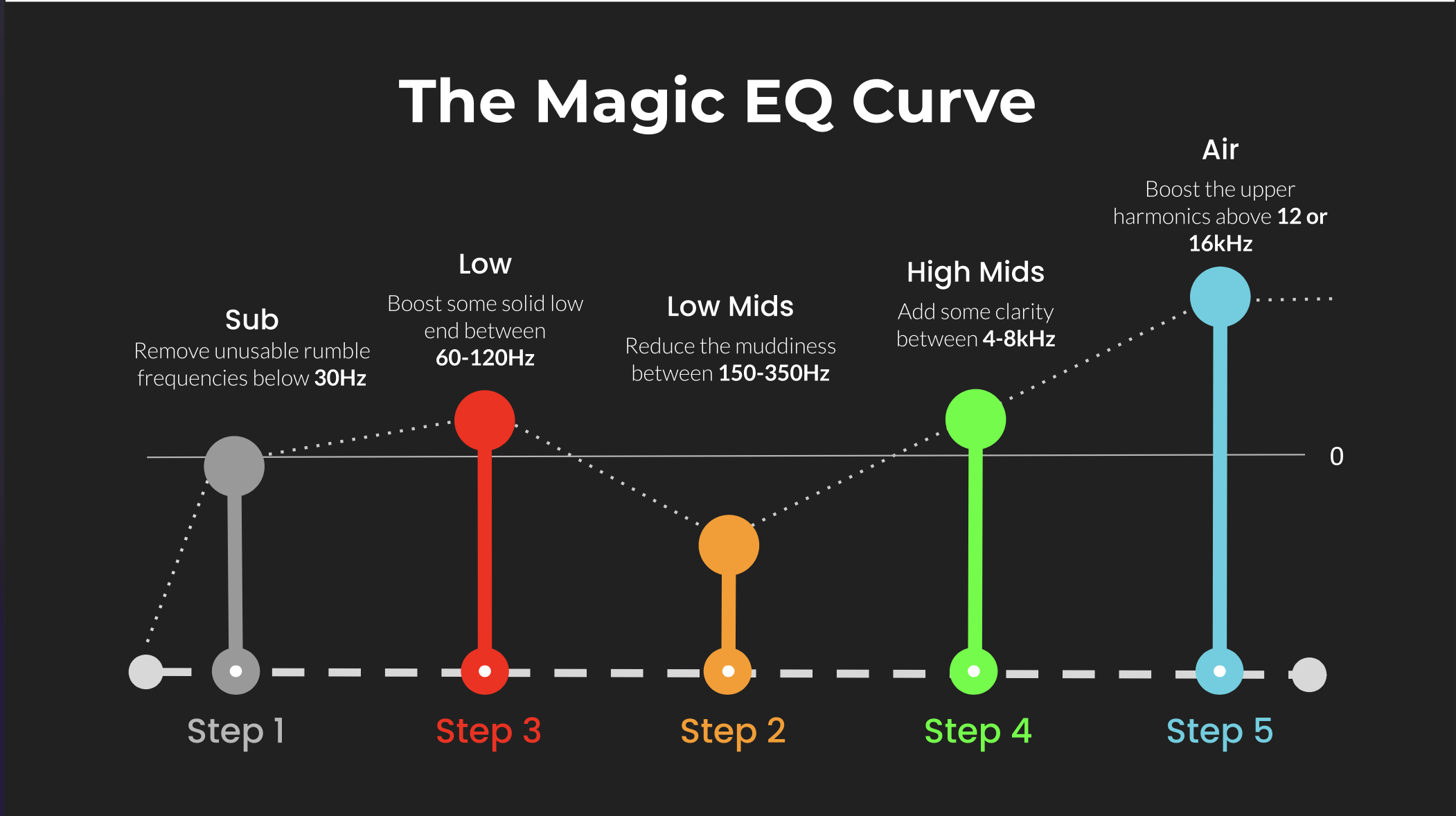 ⭐️ Download my Free Magic EQ settings Guide ⭐️

⭐️ Download my Free Magic Reverb settings Guide ⭐️
#protools #daw #homestudio #recordingschool #recording #musicproduction
Also read:
How to Start Your Own Online Business Teaching Music

Hey, I’m Futch – Music Production Coach and Ableton Certified Trainer

Learn how to make your first song and beat in Ableton Live with my
FREE 90-minute Ableton Live course
I’ve been teaching audio engineering and music production for 35 years.⭐️
Check out my new online music production program: Music Production Ninja…