

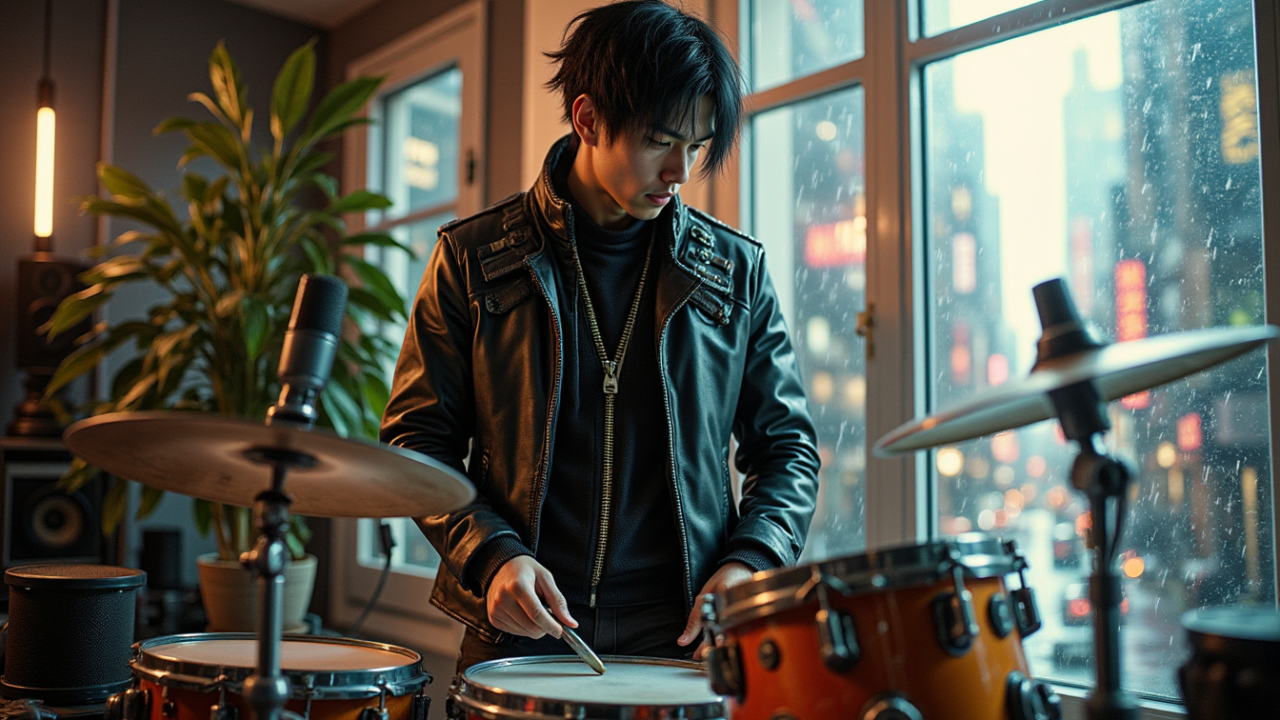

One Mic, Many Roles
“The right tool doesn’t just capture sound.
It shapes how you create.”
When building a home studio, one of the first real decisions is the microphone.
Two legends always come up:
They look different.
They’re both dynamic mics.
They’re both used on professional records.
But they serve very different roles.
Quick Summary
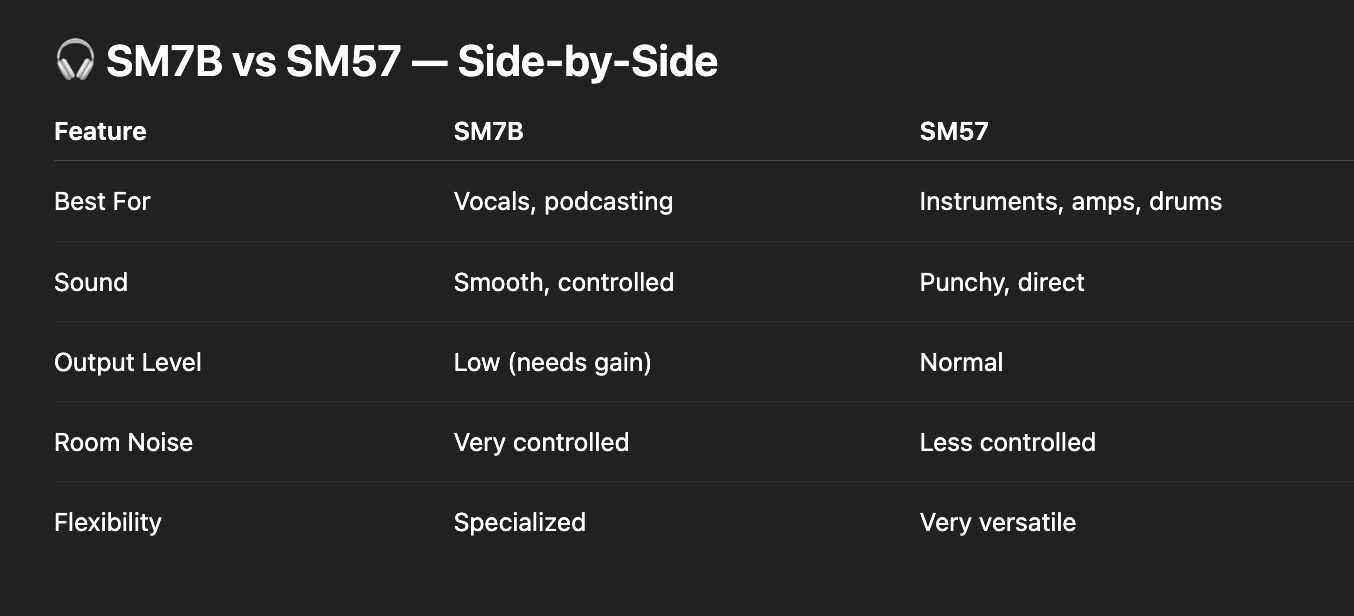
👉 Choose the SM7B for vocals, podcasting, and voice recording. Choose the SM57 for guitars, drums, and general-purpose recording. If you need a vocal-ready version of the SM57, consider the SM58.
Microphones 101: Which Mic Should I Buy for My Home Studio?
Think of it like this:
- SM7B = Voice specialist
- SM57 = Instrument workhorse
Both are tools.
But they’re designed for different jobs.
Shure SM7B
The SM7B is famous for one thing:
Clean, controlled vocal recording.
It’s used for:
- podcasting
- voiceovers
- singing
- streaming
It smooths out harsh frequencies and rejects background noise.
That’s why it’s everywhere.
Strengths
- warm, polished vocal tone
- excellent background noise rejection
- forgiving in untreated rooms
The Catch — Low Output
The SM7B is quiet.
Really quiet.
That means:
You need strong preamps.
Your Options
Option 1 — Good Audio Interface
Choose an interface with high-quality gain.
Option 2 — Inline Booster
Add a gain booster like a Cloudlifter.
This gives you clean extra gain without noise.
Option 3 — External Preamp
A dedicated preamp can also solve the problem.
If you don’t have enough gain, the SM7B won’t shine.
Shure SM57
The SM57 is one of the most recorded microphones in history.
It’s everywhere.
Studios.
Stages.
Albums.
What It’s Great For
- electric guitar amps
- snare drums
- percussion
- general instrument recording
It’s tough, simple, and reliable.
Why People Buy Multiple
Because it works on everything.
You can build an entire setup with a few SM57s.
- one on guitar
- one on snare
- one on percussion
Done.
The SM57 can record vocals.
But it’s not ideal out of the box.
The Simple Upgrade
If you want an SM57-style mic for vocals:
👉 Get a
Shure SM58
It’s essentially:
- the same core mic
- with a built-in pop filter
Better for singing and speaking.
 ⭐️ Download my Free Music Production Guides or take my free Ableton Live Course ⭐️
Choose the SM7B if you:
- record vocals or podcasts
- want a clean, pro vocal sound
- work in a less-treated room
- have (or will get) enough gain
Choose the SM57 if you:
- record guitars or drums
- want a flexible, all-purpose mic
- are building a starter mic collection
- want maximum value
The Real Answer
Most studios end up with both.
- SM7B → voice
- SM57 → everything else
3 Home Studio Setups for Every Budget (and What to Avoid) 🎛️
Q: Can I use an SM57 for vocals?
A: Yes, but the SM58 is better suited.
Q: Why is the SM7B so quiet?
A: It has low output and needs more gain.
Q: Do I need a Cloudlifter for the SM7B?
A: Only if your interface doesn’t provide enough clean gain.
Q: Which mic is better for beginners?
A: SM57 — more versatile and easier to use.
Microphones don’t just capture sound.
They shape your workflow.
The best mic is the one that fits what you record most.
If your world is voice → SM7B.
If your world is instruments → SM57.
Start there.
Then build from experience.
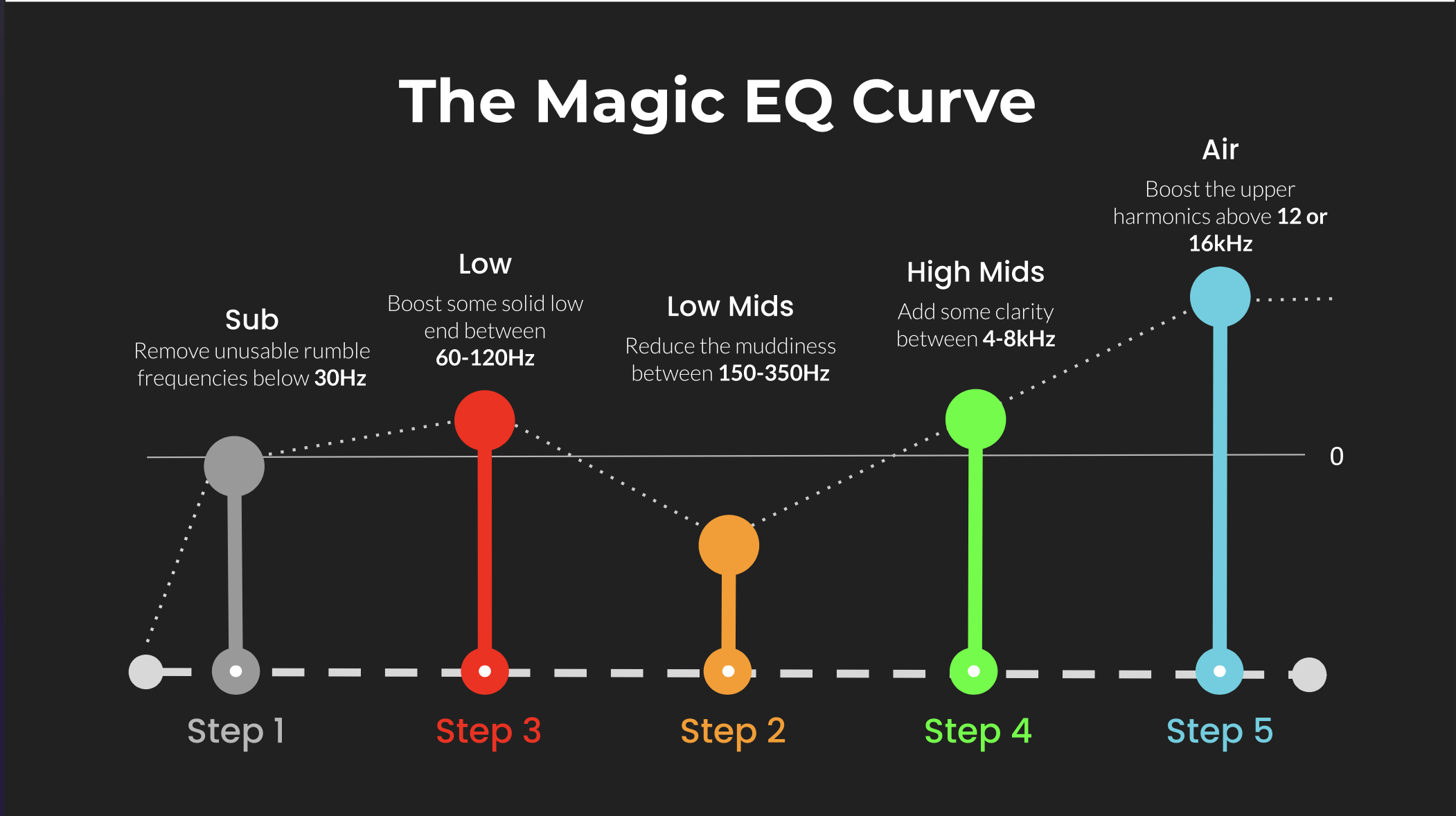 ⭐️ Download my Free Magic EQ settings Guide ⭐️

⭐️ Download my Free Magic Reverb settings Guide ⭐️
#protools #daw #homestudio #recordingschool #recording #musicproduction
Also read:
How to Start Your Own Online Business Teaching Music

Hey, I’m Futch – Music Production Coach and Ableton Certified Trainer

Learn how to make your first song and beat in Ableton Live with my
FREE 90-minute Ableton Live course
I’ve been teaching audio engineering and music production for 35 years.⭐️
Check out my new online music production program: Music Production Ninja…