

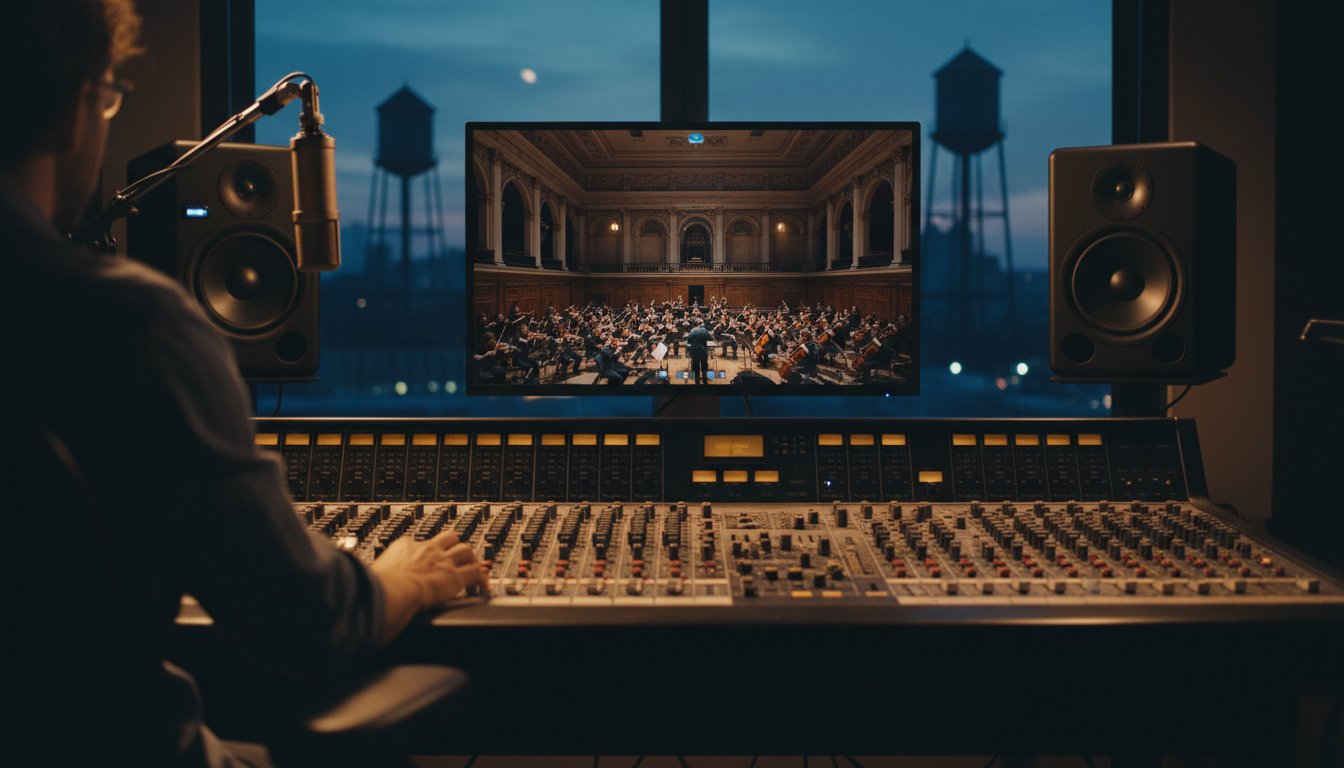

What if you could capture the cinematic power of a 64 piece symphonic ensemble without the $25,000 price tag of a traditional Union session? Most composers believe that world class sound is reserved for blockbuster budgets, but the reality of remote orchestra session rates in 2026 tells a different story. You likely feel the pressure to deliver major label quality while dodging hidden buyout fees and confusing contractor markups. As legendary composer Hans Zimmer once said, “If someone tells you there is a rule, break it.” Breaking the rule that live sessions are unaffordable starts with having the right data.
We’ve analyzed over 500 global recording projects to bring you this definitive budgeting guide. You’ll discover the exact costs of hiring soloists versus full sections and learn why a shared session can save you up to 40% on your production costs. We compare the pricing tiers across Eastern Europe, the UK, and the US so you can make an informed choice. By the end of this article, you’ll have a clear roadmap to transform your MIDI mockups into a breathtaking reality with total budget confidence. This is how you ensure your musical vision is realized without any financial surprises.
Key Takeaways
- Learn how modern streaming technology allows you to record world-class orchestras from your home studio at a fraction of the traditional cost.
- Understand how ensemble size and session duration impact remote orchestra session rates so you can plan a budget that fits your project’s specific needs.
- Discover the “shared session” model, a cost-effective strategy that lets you capture a massive symphonic sound without paying for a full three-hour block.
- Master the “Time is Money” rule by optimizing your notation and score preparation to ensure every minute in the studio translates into usable music.
- Find out how to move beyond “cookie-cutter” sounds by working with handpicked teams that prioritize your unique musical vision and major-label quality.
What Are Remote Orchestra Session Rates and Why Do They Vary?
Remote sessions allow you to witness a world-class orchestra record your score in real-time from your own studio chair. Using high-definition audio streaming tools like Audiomovers or Source-Connect, you hear exactly what the microphones capture with zero latency. By 2026, the entry price for these sessions has dropped by 30% for indie creators compared to 2016. High-speed internet and streamlined workflows mean that a professional session musician or a full 60-piece ensemble is now accessible to anyone with a solid production plan.
To better understand how to budget for your projects and manage these costs, watch this helpful video:
Hans Zimmer once said, “The magic happens when you get people in a room together.” Even in a remote setup, that collective energy translates through the microphones. It’s about more than just hitting notes. It’s about the shared breath of the woodwinds and the unified bow stroke of the strings. This human element is why remote orchestra session rates aren’t a flat fee. You’re paying for the heritage of the room and the caliber of the players. A studio with a 50-year history and a trophy room of Oscars will naturally command a higher premium than a startup facility in a converted warehouse.
The Shift from Local to Global Recording
Before 2020, recording a live orchestra usually meant paying for expensive flights, hotels, and daily per diems. Today, recording hubs in Budapest, Sofia, and Skopje offer world-class quality at a fraction of the cost found in London or Los Angeles. You don’t lose any creative control during the process. Real-time feedback allows you to ask for a more aggressive staccato or a wider vibrato instantly. At Supreme Tracks, we’ve found that 90% of successful remote sessions rely on this immediate communication to ensure the artist’s vision is realized without a $15,000 travel bill.
Total Cost vs. Hourly Rates
Understanding remote orchestra session rates requires looking past the simple hourly fee. A standard rate usually bundles the studio time, the head engineer, and the contractor who handpicks the players. You’ll need to decide between “work-for-hire” deals, where you own the recording outright, and union-scale sessions that might involve future royalty payments. Practical budgeting is key here. Don’t let hidden costs catch you off guard. You should budget specifically for these items:
- Score Printing: Expect to pay $5 to $10 per page for a full orchestral set.
- File Delivery: Large multi-track transfers can sometimes incur a small data management fee.
- VAT: If you’re recording in Europe, a 20% tax may apply unless you provide a valid business tax ID.
By choosing a tailored approach, you ensure every dollar of your budget goes toward the sound rather than logistics. Whether you need a solo cellist or a 40-piece string section, the modern remote landscape makes it possible to achieve major-label quality on an independent budget.
Key Factors That Influence Your Orchestral Recording Budget
Pricing for live strings isn’t a one-size-fits-all figure. Your final invoice depends entirely on the scope of your creative vision. Most professional remote orchestra session rates fluctuate based on four primary pillars: the number of players, the length of the session, the studio’s geographic location, and your intended usage rights. Understanding how remote orchestra session rates are structured helps you avoid overpaying for resources you don’t actually need.
The Impact of Ensemble Scale
Size dictates the texture and “thickness” of your sound. While a “Double Quartet” of eight players provides an intimate and detailed feel, a 12-piece string section is the industry “sweet spot” for indie pop and rock. This configuration, usually six violins, two violas, two cellos, and two basses, offers enough power to cut through a dense mix without the high cost of a 60-piece symphonic group. If you need a massive cinematic sound on a tighter budget, you can layer smaller sections. Recording the same 12 players twice effectively creates a 24-piece section for a fraction of the cost. Don’t forget to account for “doubling” fees. This occurs when a musician plays multiple instruments, such as a flutist switching to a piccolo, which typically adds a 25% to 50% premium to their base pay.
Session duration also changes your bottom line. Standard recordings usually run in three-hour blocks, which is the union requirement in many major hubs. If you only have one or two short cues, look for “shared” sessions. These allow you to book time by the minute, often starting in 15 or 30-minute increments, making high-end players accessible for smaller projects. Geography plays a massive role here too. Western European cities like London or Vienna offer world-class prestige but come with strict union regulations. Conversely, Eastern European hubs like Sofia or Budapest often provide flat-fee structures. These locations are popular because they simplify the Film Music Budget by removing complex residual calculations and hidden fees.
Rights, Buyouts, and Residuals
Ownership is the most critical part of your recording contract. A “Full Buyout” means you own the recording forever, across all media, without ever paying another cent. This is essential for film composers. Without a buyout, you might owe unexpected residuals if your project moves from a small film festival to a worldwide streaming release on Netflix or Amazon Prime. As legendary composer Hans Zimmer once said, “If something sounds good, it’s because of the players.” You want to ensure those players are compensated fairly while protecting your intellectual property.
Usage rights for a YouTube video are significantly more affordable than a worldwide commercial broadcast. Always define your distribution plan before you sign any paperwork. Clear contracts prevent legal headaches that could cost you thousands in the future. At Supreme Tracks, we’ve delivered over 4,500 productions since 2012, and we always prioritize clear, artist-friendly terms. We help you skip the guesswork by providing custom orchestral arrangements tailored to your specific budget and style, ensuring every detail aligns with your goals.
- Ensemble Size: Choose 12 players for pop/rock or 40+ for epic film scores.
- Booking Type: Use shared sessions for single tracks to save up to 60% on costs.
- Location: Eastern Europe offers flat fees; Western Europe uses hourly union rates.
- Usage: Secure a full buyout to avoid future residual payments.
By balancing these factors, you can achieve major-label quality without blowing your entire production budget. It’s about being strategic with your resources and choosing a partner who understands the fine details of the recording process.
Comparing Costs: Soloists, Sections, and Full Symphonic Sessions
Understanding remote orchestra session rates starts with identifying the scale of your project. You don’t always need a 60-piece ensemble to achieve a cinematic impact. Sometimes, a single, world-class soloist provides the emotional depth your track requires. Other times, only a full symphonic section can deliver the wall of sound your score demands. Budgeting for these options requires a clear grasp of how recording studios structure their time and talent fees.
The cost of your production will fluctuate based on the number of players, the length of the recorded material, and the location of the studio. For instance, US-based recordings often adhere to specific union guidelines. When planning a session in the States, referencing the AFM session rates is a vital step for any producer. These figures set the baseline for professional pay, ensuring you’re working with top-tier talent while staying legally compliant. Outside of union-heavy regions, prices can be more flexible, but quality remains the primary driver of the final invoice.
Shared Sessions: The Budget Game-Changer
Shared sessions are the most efficient way to access a professional orchestra on a modest budget. This “bus-style” recording model allows multiple composers to split the cost of a three-hour block. Instead of booking the entire hall, you purchase a specific time slot, usually 15 or 30 minutes. Typical remote orchestra session rates for a 15-minute slot range from $400 to $800. This fee usually includes the musicians, the conductor, and the engineering team.
The primary advantage is cost. You receive a world-class recording for a fraction of the private session price. However, flexibility is limited. You won’t have time for extensive rehearsals or experimental retakes. You must arrive with polished, error-free scores. For student films or independent game soundtracks, this is often the only way to get real strings into the mix without breaking the bank.
Private Session Price Ranges
When your project requires total creative control, a private session is the only solution. This is where you call the shots on every articulation and tempo change. For a dedicated string section of 12 to 24 players, you should estimate a budget between $1,500 and $3,500 per session. This price range covers the players’ fees and the studio rental but often excludes post-production. “The magic of live performance is that it’s never the same twice,” says legendary composer Hans Zimmer. A private session captures that unique magic perfectly.
If you’re aiming for a full symphonic sound with 40 or more players, prepare to budget $5,000 or more at premium recording hubs. Many professional studios now offer “All-In” packages. These bundles include the recording, mixing, and mastering for a flat fee. This approach removes the guesswork from your accounting. To see how these costs compare to individual hires, check out our guide on session musician rates in 2026.
Soloist Rates: Enhancing Your MIDI Mock-up
You don’t always need a crowd to make a statement. Adding a single virtuoso soloist to a high-quality MIDI mock-up can fool even the most trained ears. This hybrid approach is common in modern television scoring. A solo violinist or cellist can provide the “human” element that software lacks. Rates for elite soloists typically fall between $250 and $600 per track, depending on the complexity of the piece. It’s a strategic way to elevate your production value while keeping your total spend manageable. At Supreme Tracks, we specialize in pairing your vision with the right talent to ensure every note resonates with major-label quality.
Maximizing Your Session: How to Optimize Your Score for Efficiency
In the world of high-end music production, time isn’t just a resource; it’s your most significant expense. Professional orchestras typically record about 2 to 3 minutes of finished music per hour of studio time. This pace is the industry standard for major-label projects and film scores. If your session falls behind due to poor preparation, your remote orchestra session rates can effectively double as you pay for expensive overtime. Precision is the key to maintaining your budget while achieving a world-class sound that captivates your audience.
Notation accuracy acts as your first line of defense against wasted minutes. On-the-spot corrections are expensive distractions that break the musicians’ creative flow. Every minute spent fixing a transposed horn part or a missing dynamic marking is a minute not spent capturing the perfect take. To ensure your project stays on track, many successful composers utilize a professional music arrangement service. This step guarantees that your scores meet the rigorous standards of elite ensembles, allowing the players to focus on expression rather than deciphering notes. As Quincy Jones once said, “The music is the only thing that matters,” but you can only reach that music if your technical foundation is flawless.
Click tracks and pre-recorded MIDI guides are also non-negotiable tools for modern sessions. A clear, reliable click track ensures the ensemble stays perfectly synced with your existing production layers. Providing a high-quality MIDI guide helps the conductor and players understand the harmonic context and the emotional weight of the piece before they even play the first note. This preparation reduces the need for multiple “rehearsal takes,” which directly protects your remote orchestra session rates from inflating. Hans Zimmer famously noted that if you have a good idea, it is all about the execution; in a remote session, execution begins with the technical assets you provide.
Technical Preparation Checklist
Efficiency starts with the physical score. Use 12-point fonts for text and ensure page turns occur during rests to prevent audible paper rustle in the microphones. Your DAW session must be “session-ready” before the clock starts. This means all tracks are labeled clearly, the sample rate is set to 48kHz or 96kHz, and the tempo map is 100% accurate. A 10-minute technical delay in a session with 40 players represents over 6 hours of lost man-power in a single moment.
Effective Communication with the Conductor
When giving feedback remotely, use descriptive emotional language to get faster results. Instead of asking for a “slightly faster attack,” ask for a sound that feels “urgent and breathless.” This helps the conductor translate your vision to the players instantly. You should also prepare “alternates” by recording both staccato and legato passes for key sections. This gives you maximum flexibility during the mix without needing to re-book the room. Supreme Tracks has delivered over 4,500 productions by following these meticulous communication standards to keep projects on schedule.
Supreme Tracks: World-Class Orchestral Productions Tailored to Your Vision
You’ve spent weeks or even months perfecting your score. It’s a personal piece of your soul, so it deserves more than a one size fits all approach. At Supreme Tracks, we don’t believe in cookie-cutter solutions. Every project is a unique collaboration where your specific musical goals take center stage. We’ve spent over 12 years helping 1,500+ artists turn their midi mockups into breathtaking reality. Whether you need a full 80-piece symphony or just want to record strings online for a pop ballad, we handpick the perfect ensemble for your specific sound.
Our team pulls talent from the world’s elite recording hubs. This includes session players in cities like Los Angeles, Nashville, London, and Budapest. By leveraging this global network, we find the right acoustic space and player chemistry for your specific genre. This approach ensures that your remote orchestra recording sounds like a major-label release, not a generic library track. We manage the entire journey from your raw score to a master that’s ready for the big screen or the radio.
A Seamless Remote Experience
Managing a live session across different time zones can be a logistical nightmare for a composer. We handle every detail, from booking the hall to supervising the engineers. You’ll never see hidden costs or surprise buyout fees here. Our transparent pricing is a key factor when you compare remote orchestra session rates across the industry. As the legendary Quincy Jones once said, “I’ve always thought of a lead sheet as a map.” We take your map and navigate the complex production world so you don’t have to. You get to stay focused on the creative side while we deliver world-class files to your inbox.
Realize Your Musical Masterpiece
We customize the ensemble size to match your budget and sonic goals perfectly. You don’t need a Hollywood budget to get Hollywood quality. Over 4,500 productions have been delivered through our studio, proving that our streamlined process works for indie creators and established pros alike. We focus on fine-tuning every arrangement until it’s ready for the world to hear. Our producers work one-on-one with you to ensure every nuance of your vision is captured. This commitment to excellence is why we’re the trusted partner for creators who refuse to compromise on their sound.
Bring Your Cinematic Vision to Life in 2026
Navigating remote orchestra session rates in 2026 requires a smart balance of technical prep and artistic ambition. You’ll find that optimizing your MIDI files and score layouts can reduce studio time by up to 20%, allowing you to allocate more funds toward a larger string section or a premium soloist. As Igor Stravinsky once said, “To listen is an effort, and just to hear is no merit.” Your goal is to create music that demands a real connection, and that starts with the rich, organic texture of live players. Learning more about modern music production can help you streamline this process even further.
Supreme Tracks provides the bridge between your demo and a professional, major-label quality master. We’re proud to be trusted by 1,500+ artists worldwide who refuse to compromise on their sound. Our Grammy® winning production team handles the logistics so you can focus on the composition. It’s time to elevate your project with the same tools used by the industry’s top professionals. Transform your score with a world-class remote orchestra session today and hear your music exactly as you imagined it. Your next masterpiece is just one session away.
Frequently Asked Questions
What is the average cost of a 15-minute shared orchestra session?
A 15-minute shared orchestra session typically costs between $450 and $950 depending on the ensemble size. These sessions allow you to split the cost of a 60-piece orchestra with other creators. It’s an efficient way to get major-label quality for a fraction of the price. Supreme Tracks organizes these sessions to help you achieve a world-class sound without the high cost of booking a full three-hour block yourself.
Do I need to pay extra for the rights to use the recording in a movie?
Most remote sessions include a full buyout, so you don’t pay extra for movie rights. This means you own the recording 100% for all media, including theatrical and streaming. Hans Zimmer once said, “If someone has a good idea, you should use it.” Protecting that idea with a clear contract is vital. Supreme Tracks ensures all sessions come with clear, all-inclusive rights for your total peace of mind.
How many minutes of music can an orchestra record in a 3-hour session?
You can expect to record 15 to 25 minutes of music in a standard 3-hour session. This average assumes your music is well-organized and not overly complex. Professional orchestras typically record about 7 minutes of dense film score per hour. Efficiency is key. Supreme Tracks helps you fine-tune your scores beforehand to ensure every minute of studio time is used to maximize your project’s potential and budget.
Is it cheaper to record a remote orchestra in Eastern Europe?
Remote orchestra session rates are significantly lower in Eastern Europe, often saving you 40% compared to US studios. You can expect to pay $1,500 per hour for a full 50-piece orchestra in Sofia or Budapest. This makes professional recording accessible for independent creators. Supreme Tracks leverages these global connections to provide you with elite musicians while keeping your production budget under control and your quality high.
What technical equipment do I need to attend a remote recording session?
You only need a stable internet connection and a pair of high-quality headphones to attend. Most studios use software like Audiomovers to stream 24-bit, low-latency audio directly to your computer. You can communicate with the conductor in real-time via Zoom or Skype. This modern setup allows you to supervise the world-class recording from your own home studio without the need for expensive hardware or travel costs.
Can I record just a string section instead of a full orchestra?
You can definitely record just a string section, which usually consists of 12 to 22 musicians. This smaller ensemble provides a lush, intimate sound perfect for pop ballads or indie film scores. It’s a cost-effective alternative to a full symphonic setup. For more advice on arranging for smaller groups, explore our latest articles on [Music Production] to help refine your unique sonic vision and professional sound.
Do remote orchestra rates include mixing and mastering?
Standard rates usually cover the recording and raw stems, but they don’t include mixing and mastering. Post-production is a separate, specialized task that requires a different set of skills. You’ll receive high-quality 48kHz or 96kHz WAV files to take to your engineer. Supreme Tracks offers tailored mixing services to ensure your world-class recording sounds like a finished, major-label hit that captivates your audience and achieves your goals.
How do I prepare my MIDI files for a professional orchestra?
Start by exporting a clean MIDI file that includes a detailed tempo map and markers. Professional orchestrators need this data to create the sheet music your players will read. As legendary producer Quincy Jones said, “Check your ego at the door and focus on the craft.” Meticulous MIDI prep is the essential craft that ensures your session runs smoothly and every note of your vision is captured perfectly.
Realize Your Musical Vision
Ready to elevate your project with the sound of a world-class orchestra? At Supreme Tracks, we specialize in turning your creative ideas into major-label realities. Our team of handpicked producers and musicians has delivered over 4,500 successful productions for artists globally. We offer tailored recording solutions that fit your specific goals and budget. Build your production plan today and hear your music come to life with professional, award-winning quality. Get your free, instant project estimate now.