


Two Ways to Create Sound
A sampler and a synthesizer can both make:
Bass.
Drums.
Pianos.
Pads.
Strings.
Things that don’t sound like anything you’ve heard before.
But they begin in completely different places.
A sampler starts with a recording.
A synthesizer starts with a sound generator.
Think of it like this:
Sampler = Camera.
Synthesizer = Paintbrush.
One captures something that already exists.
The other creates something new.
How Synthesis and Synthesizers Work 🎛️
Quick Summary
👉 A sampler records or loads audio and lets you play it back like an instrument.
👉 A synthesizer generates sound electronically and lets you shape it.
Samplers are great for:
- Drums
- Chopped vocals
- Acoustic instruments
- Found sounds
- Hip-hop and beatmaking
Synthesizers are great for:
- Bass
- Leads
- Pads
- Electronic textures
- Sound design
But modern software increasingly combines both.
ELI5:
A sampler is a machine that remembers sounds.
Record yourself saying:
Hey!
Put that recording into a sampler…
And now you can play it from a keyboard.
Play lower notes…
Your voice gets lower.
Play higher notes…
Your voice gets higher.
You can also:
Cut it.
Loop it.
Reverse it.
Filter it.
Pitch it.
Turn one recording into an entirely new instrument.
Ableton’s Simpler, for example, can play, loop, warp and slice audio samples across a keyboard.
Classic Drum Machines: The SP-1200 🪨
ELI5:
A synthesizer is a machine that creates sound from scratch.
Instead of starting with a recording…
It starts with something simple.
Usually a waveform.
Then you shape it.
Oscillator.
Filter.
Envelope.
LFO.
Effects.
A synthesizer can imitate a bass guitar.
Or a flute.
Or a spaceship.
Or create a sound that has never existed before.
Synth Legends: The Sequential Prophet-5 🔮
Early electronic instruments were already experimenting with recorded sound.
But digital sampling changed everything.
The Fairlight CMI became one of the defining early digital sampling instruments of the late 1970s and early 1980s.
Artists could record sounds…
Then play those recordings from a keyboard.
It became associated with artists including Peter Gabriel, Kate Bush, Art of Noise and Tears for Fears.
Then samplers became smaller.
Cheaper.
And much more rhythmic.
The Akai MPC60, designed by Roger Linn and released in 1988, combined sampling, drum pads and MIDI sequencing into one production machine.
That idea helped define the modern beatmaking workflow.
Today…
You can do all of this inside your DAW.
| Classic Hardware | Modern Software |
|---|---|
| Fairlight CMI | Arturia CMI V |
| E-mu Emulator II | Arturia Emulator II V |
| Akai MPC60 | Ableton Simpler / Sampler |
| Hardware sample libraries | Kontakt 8 |
Kontakt has essentially turned the sampler into an entire ecosystem of sampled pianos, orchestras, drums, synthesizers and experimental instruments.
Listen to:
The Fairlight CMI became part of the song’s famously chopped, explosive production style.
And:
Art of Noise — Moments in Love
Arturia lists Moments in Love as one of the classic recordings associated with the Fairlight CMI.
Sampling changed music because suddenly…
Any sound could become an instrument.
Synthesizers came from a different direction.
Early synthesizers were enormous modular systems.
Oscillators.
Filters.
Envelopes.
Cables everywhere.
Then in 1970…
The Minimoog Model D put the essential pieces into a portable keyboard.
No giant modular wall required.
Then digital synthesis arrived.
The Yamaha DX7 appeared in 1983 and brought FM synthesis into studios around the world.
At roughly the same time, instruments like the PPG Wave were exploring digital wavetable synthesis combined with analog filtering.
Three very different ways of creating sound.
⭐️ Download my Free Music Production Guides or take my free Ableton Live Course ⭐️
This is the classic synthesizer idea.
Start with a sound containing lots of frequencies.
Then remove some.
Start big.
Subtract what you don’t need.
Like sculpting.
The oscillator creates the raw material.
The filter removes frequencies.
The envelope shapes how the sound changes over time.
Famous Hardware
- Moog Minimoog
- Sequential Prophet-5
- Roland Juno series
The Minimoog Model D became one of the most important examples of this approach.
Software Equivalent
Arturia Mini V recreates the classic Minimoog-style architecture inside your DAW.
Listen
That huge synth bass sound is a perfect example of why analog subtractive synthesizers became so loved. Arturia lists Chameleon among the Minimoog’s classic hardware credits.
FM stands for:
Frequency Modulation.
ELI5:
One oscillator wiggles another oscillator…
Really fast.
The interaction creates new harmonics.
The result can sound:
Glassy.
Metallic.
Bright.
Bell-like.
Electric.
And very digital.
Famous Hardware
Yamaha DX7.
The DX7 was released in 1983 and used six FM operators to create complex sounds that were very different from the analog synthesizers before it.
Software Equivalents
Operator combines FM with subtractive and additive synthesis inside Ableton Live.
Listen
The record contains several synthesizers, but the Yamaha DX7 is among the hardware associated with its famous production.
The sound of FM became part of the DNA of the 1980s.
Wavetable synthesis starts with digital waveforms.
But instead of choosing only one waveform…
Imagine having a flipbook full of them.
The synthesizer can move through the pages.
Wave 1.
Wave 2.
Wave 3.
Wave 4.
As it moves…
The sound changes.
This makes wavetable synthesis incredible for:
Movement.
Textures.
Pads.
Bass.
Modern sound design.
Famous Hardware
PPG Wave
Later:
Waldorf Microwave
The PPG Wave became an important early wavetable synthesizer, while Waldorf continued the idea with the Microwave beginning in 1989.
Software Equivalents
Ableton’s Wavetable lets you morph through collections of waveforms to create evolving sounds.
Here is the simplest way to remember it:
| Sampler | Synthesizer |
| Records sound | Generates sound |
| Starts with audio | Starts with a waveform |
| Captures | Creates |
| Great for drums | Great for basses |
| Great for real instruments | Great for electronic sounds |
| Camera | Paintbrush |
But there is a catch.
Modern instruments blur the line.
A sampler can have:
Filters.
Envelopes.
LFOs.
Modulation.
All the things we associate with synthesizers.
And modern synthesizers can use:
Samples.
Wavetables.
Granular audio.
Multiple synthesis engines.
The border is getting blurry.
Samplers tend to attract producers who like to find sounds.
Beatmakers.
Hip-hop producers.
Pop producers.
Film composers.
Electronic producers.
Producers who record their own sounds.
If you hear something interesting and think:
I want to turn that into music…
You probably think like a sampler.
Synthesizers tend to attract producers who like to build sounds.
Electronic producers.
Sound designers.
Techno producers.
EDM producers.
Film composers.
Experimental musicians.
If you hear something in your imagination and think:
I wonder if I can create that sound…
You probably think like a synthesist.
The sampler begins with the outside world.
A voice.
A drum.
A record.
A piano.
A car door.
A bird.
Anything.
The synthesizer begins with almost nothing.
An oscillator.
A waveform.
Electricity.
Math.
Then builds a world from there.
Sampler = Capture.
Synthesizer = Create.
But you don’t have to choose one side.
Some of the most interesting music happens when you use both.
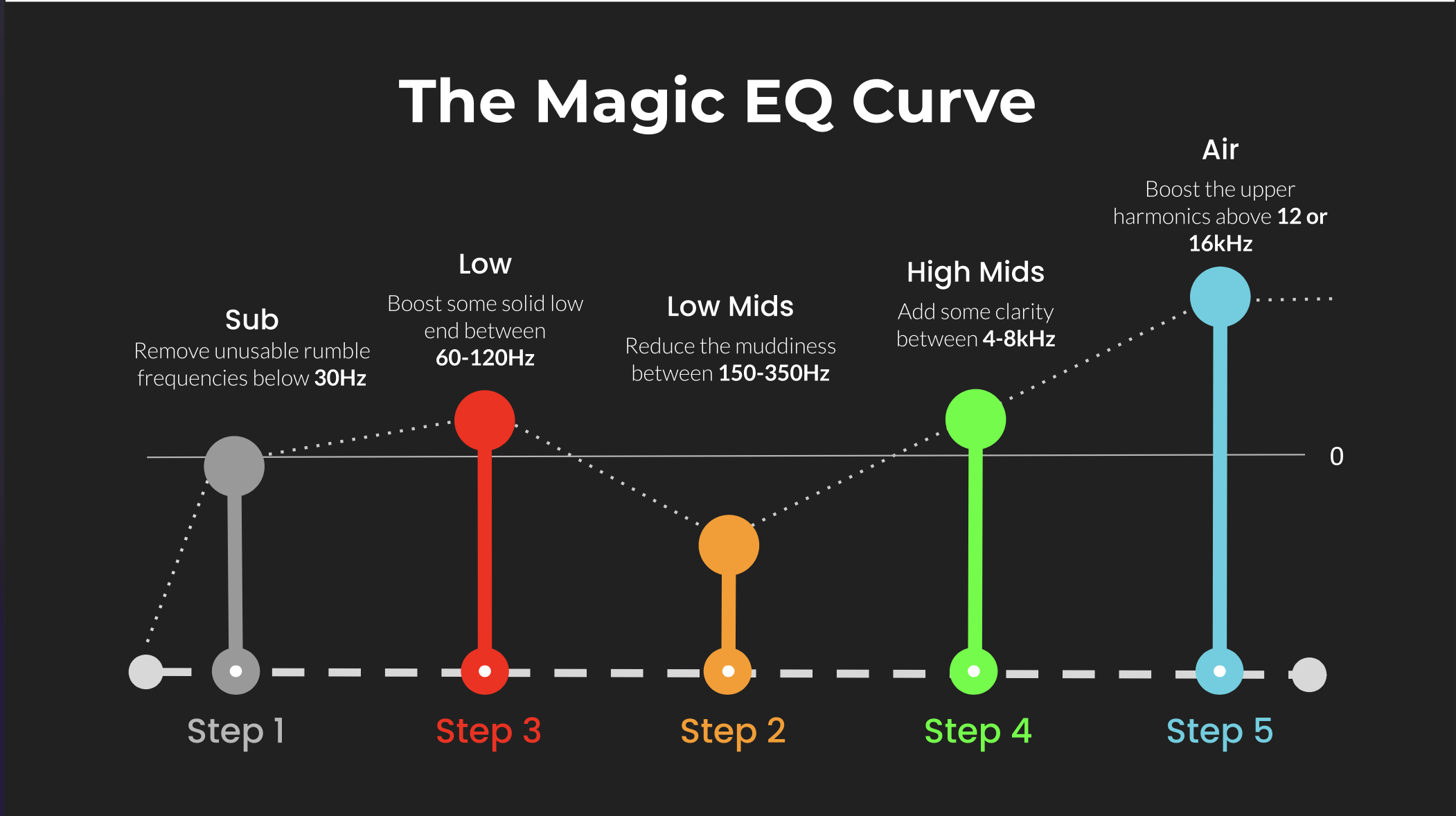 ⭐️ Download my Free Magic EQ settings Guide ⭐️

⭐️ Download my Free Magic Reverb settings Guide ⭐️
#protools #daw #homestudio #recordingschool #recording #musicproduction
Also read:
How to Start Your Own Online Business Teaching Music
Hey, I’m Futch – Music Production Coach and Ableton Certified Trainer

Learn how to make your first song and beat in Ableton Live with my
FREE 90-minute Ableton Live course
I’ve been teaching audio engineering and music production for 35 years.⭐️
Check out my new online music production program: Music Production Ninja…