

I’ve been reviewing audio plugins on Bedroom Producers Blog for more than 15 years.
I don’t have an exact number, but I’ve probably tested more than 2,000 plugins in that time. Maybe close to 2,500, depending on how strictly we count the ones I installed, disliked, and uninstalled right away.
During all that plugin testing, a thought kept building in the back of my mind. I figured I understood plugins really well by now, and that if I ever made one, I would surely know what to do.
Then I spent almost two years making VATRA, my first plugin for Flame Sound, and that assumption went down the drain pretty fast.
That was the part I really didn’t expect.
Reviewing plugins taught me a lot about what makes a good one. It should be useful, solve a real problem, work as expected, feel intuitive, look good, run efficiently, be easy to install, and not annoy users with licensing or paid updates.
But developing a plugin forced me to turn that understanding into decisions, and some of those decisions took months to make.
How it all started
The idea started with a problem I kept running into while mixing and mastering my own music.
Sometimes a mix feels too small next to a reference. You want more loudness, more weight, more air, more punch, and maybe a little warmth. The usual fixes work, but they all cost something.
Limit too hard, and you get pumping artifacts. Clip too much, and it sounds harsh while killing the transients. Boost the lows with EQ, and suddenly the low end is bigger but muddy. Boost the highs, and you get too much sizzle at the top. Add five processors in a row, and now you are fixing some issues while creating new ones.
I realized I wanted a single tool to help with that final push.
That sounds simple on paper. Of course it does. Every idea sounds simple on paper.
My very first concept was based on a clipper. Then it slowly started moving in other directions. What if it could add loudness without relying on traditional compression or obvious clipping? What if the low end could feel heavier without the disadvantages of a plain EQ boost? What if the top end could open up without becoming harsh?
The answers to those questions eventually led to VATRA, but it was a long ride.
A giant leap and a small-step paradox
Before there was an interface, a name, or even a proper product, there were paper sketches and a lot of talking about concepts with developer friends who understood DSP better than me.
I was lucky enough to meet many developers while working on BPB, and many of them helped with ideas.
Most importantly, I met a lead developer who understood audio incredibly well, but was also patient, helpful, and ready to go through the slow version of the process with me. That mattered more than I can explain, because so much of building an audio plugin comes down to tiny differences in words.
When I say “more density,” what does that mean in DSP terms? When I say “warmer but not darker,” what should actually change in the signal? When I say, “This is almost right, but it needs to sound more analog,” how do you turn that into code?
Eventually, after a few months of back-and-forth, the developer sent me the first test build. It had no GUI. It looked nothing like a real product. We didn’t even have proper names for the controls.
But I loaded it in my DAW, put it on a track, and heard the first version of the thing I had been imagining for years.
That was a huge moment for me. I can’t explain how good I felt that day. I remember thinking, man, this could actually work.
At the same time, it was only the first tiny step, which is the cruel part. You get one huge breakthrough, then immediately realize you still need to build the other 95 percent of the plugin.
In a way, that’s when the adventure really started.
Turning a concept into a product
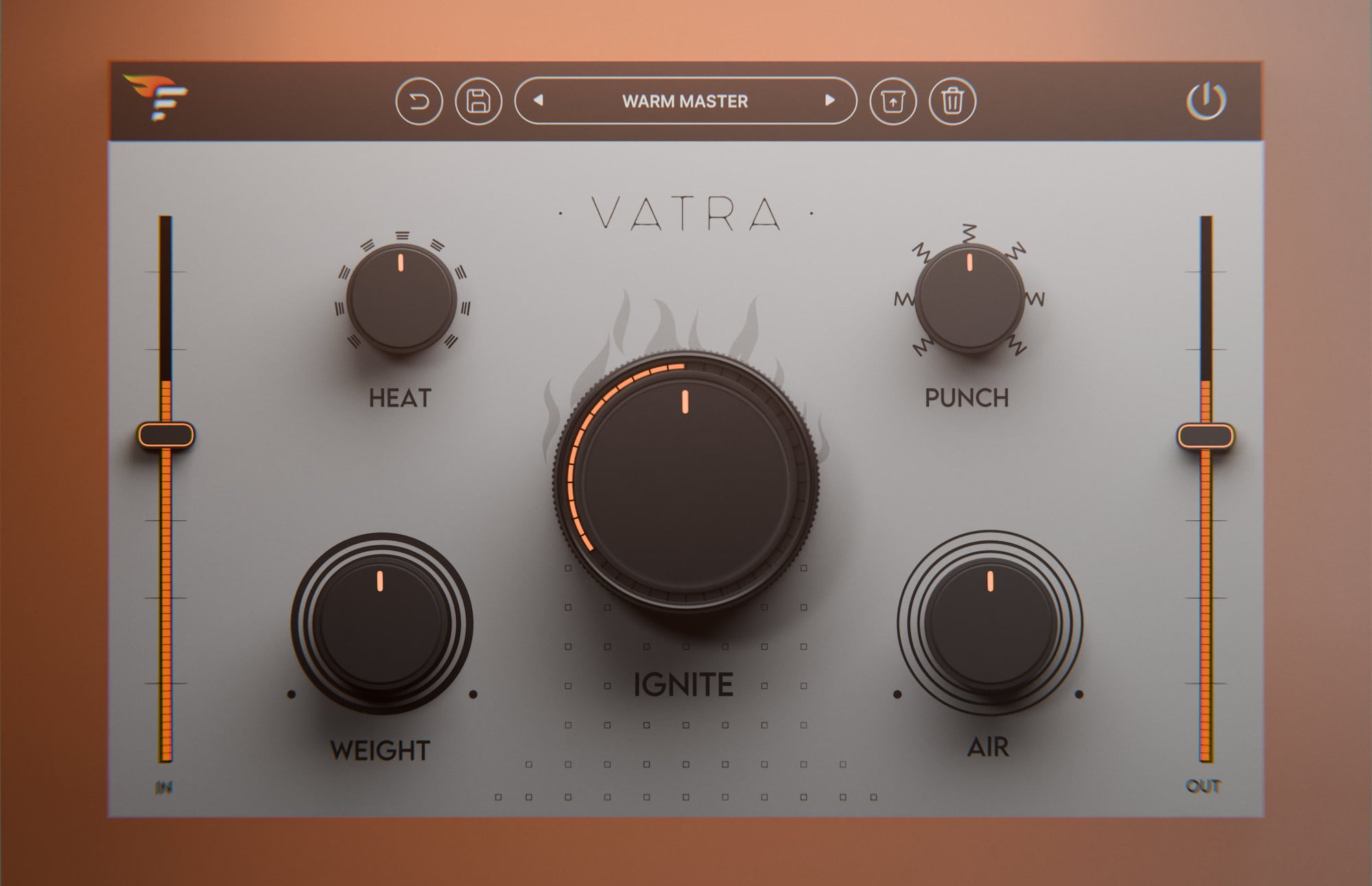
VATRA has five main controls. WEIGHT, IGNITE, HEAT, AIR, and PUNCH.
They look simple on purpose. I wanted a plugin you could understand in a few seconds and tweak by ear.
But in the beginning, those were only rough concepts. I knew I wanted more loudness and color, focused bass, detailed highs, and snappy transients. But those are finished dishes. You still have to figure out the recipe.
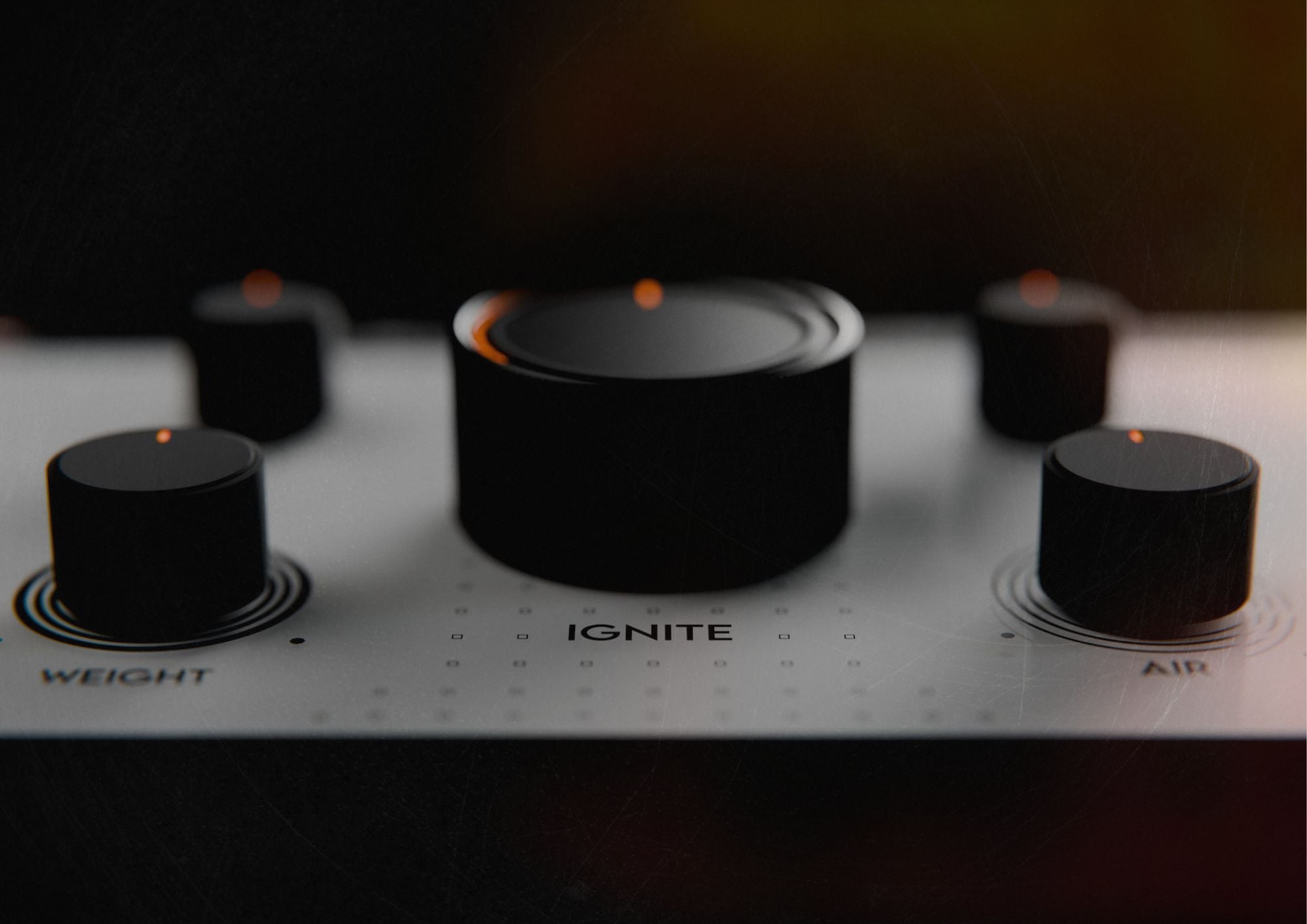
IGNITE was the hardest part to get right. It is a dual-stage density engine that brings low-level detail closer to the peaks, so the sound feels louder and more present without the pumping you get from a limiter.
The main problem was range. I wanted IGNITE to go far enough to be useful, especially on individual sounds, but not so far that it turned into obvious distortion the moment you pushed it. We went back and forth on this more than anything else.
One version would do too little, and I felt it was underwhelming. Then we’d go too far and make it difficult to tame. Combined with the other controls, it could lead to unpleasant distortion.
After months of testing and iteration, we arrived at a version that made the mix feel louder and more alive without distortion. Just as importantly, it played nicely with the other controls, so they could complement one another.
PUNCH took a lot of work too, because transient shaping is hard to make musical. A kick drum is one thing, and a full mix is another. The control had to react well to both, and that took time.
WEIGHT and AIR also had to avoid the obvious traps. I did not want them to behave like plain low- and high-frequency boosts that simply traded size for mud or brightness for harshness. In the final version, both controls use multiple processing stages to do exactly what we needed them to.
HEAT became the tape-inspired color control. Tape is my favorite kind of flavor, but it’s very hard to distill into a single knob, so that took time, too. We made it so that, at lower settings, it adds warmth and glue and it starts getting gritty when you push it harder.
That all took months of listening, testing, changing things, and then testing them again because the first fix usually created a new problem.
The name came last
As a teenager, I’d spend hours with a couple of friends coming up with names for our band, even though, as teenagers do, we had only one unfinished song.
Naming a plugin in 2026 felt a lot like that. Everything good is taken, and you realize you’re that teenager again, coming up with a name for a band that has no songs.
I went through a lot of ideas until, one night, VATRA arrived out of nowhere just as I was going to bed.
Vatra means “fire” in my language and in several other Slavic languages. It also sounds good in English (at least I hope), even though it doesn’t have a meaning.
Most importantly, the plugin adds warmth, the company is called Flame Sound, and it finally felt like the right name. I went to bed very happy that night.
There was one funny moment during the interface design process. I was explaining the font we needed and mentioned those old Varta batteries as a visual reference. The designer misunderstood me and sent back a version of the GUI that said VARTA instead of VATRA.
For a second, I had accidentally made a battery plugin.
The interface was its own project
Speaking of the interface, designing it was almost like building a second plugin.
I’ve designed a few interfaces for free BPB plugins in the past, but I wanted someone else to design VATRA, just as you might want someone else to master your song. Other people can look at your ideas objectively.
The interface had to capture the plugin’s intent and look impressive without unnecessary bells and whistles.
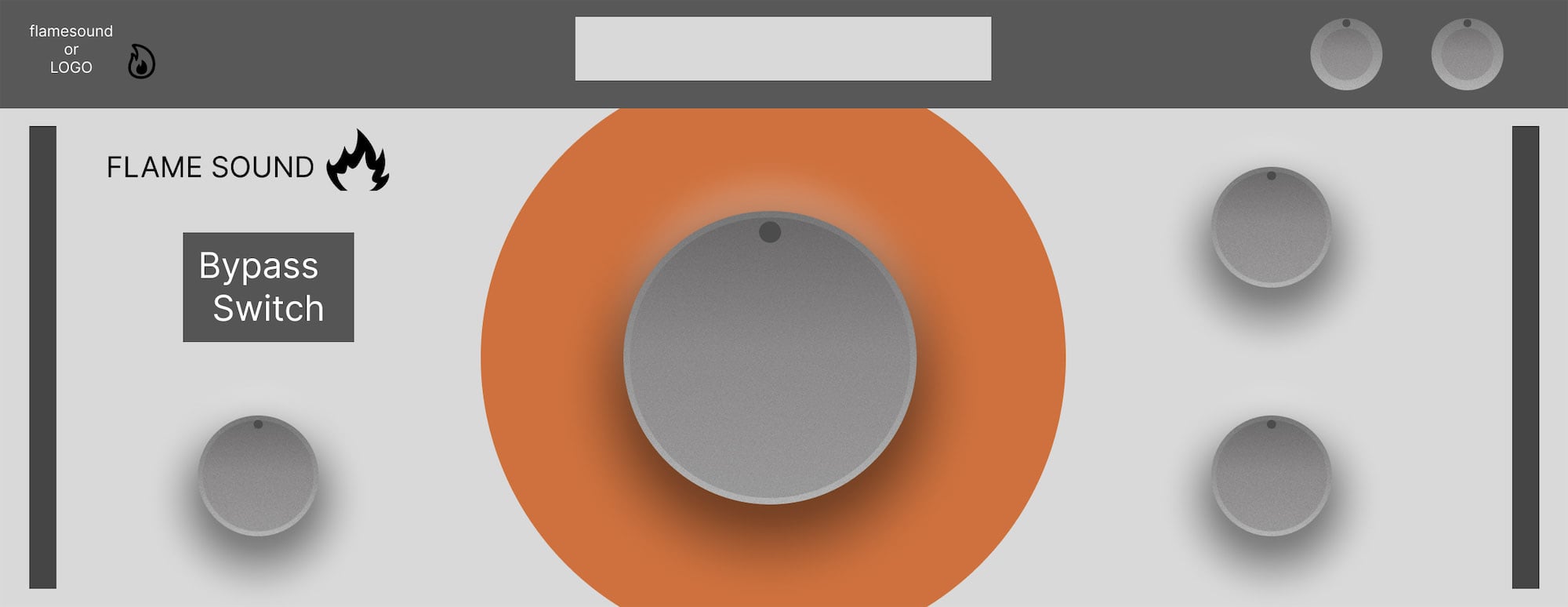
Finding that balance is harder than it sounds. If the design becomes too busy, it gets in the way. That’s the part I respected most during my collaboration with the designer. He said no to many of my ideas without hesitation, and he was right. At the same time, he recognized the good ideas and made them work in practice.
The coolest thing is that I don’t know him personally. We collaborated remotely, sometimes by sharing screens while he opened the actual project file and tweaked it in real time. We came up with some excellent solutions that way.
The designer started with paper sketches, then went through multiple digital versions before the final look came into view. I wanted the interface to feel warm, bold, and easy to read while you are actually working on a mix.
But just as with the DSP, approving the final sketch felt like a huge moment while also being the first small step. We spent much more time turning that sketch into the final design.
Then came the part every designer and programmer knows too well. A finished design that looks great does not always behave perfectly once it becomes a real plugin interface.
Small things had to be adjusted by hand. Spacing, image files, and the way the controls sat in the interface. There are countless details that most people don’t notice at first, but you can’t unsee them once you do. I mention that very often when reviewing plugins in the BPB news section.
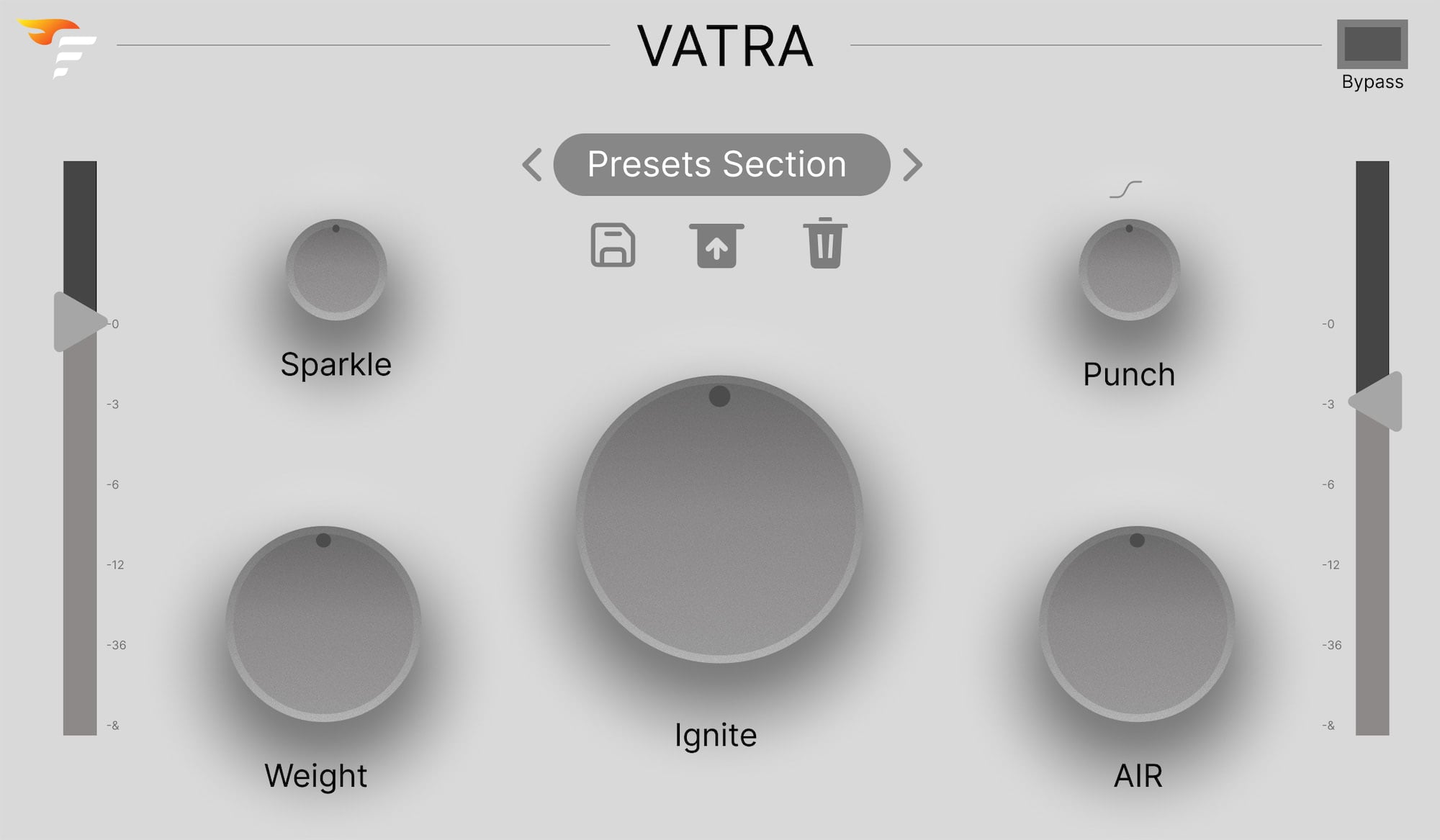
I’m sure both the developer and the designer were a bit annoyed with my persistence, but we made dozens of small changes until the things I couldn’t unsee were gone. I hope.
Looking back at those early concepts now for the purpose of this article makes me appreciate the final design even more.
Knowing where to stop
The hardest part of finishing a plugin is deciding when it is actually finished. Really, it’s never finished. But at some point, you have to draw the line and publish it.
It is very similar to working on a song. You can always add something. A dry/wet control, a resizable interface, more presets, another mode, or one more tiny improvement that delays the release by another month.
Automatic gain compensation was the biggest one for me.
Louder almost always sounds better at first, and tools like VATRA benefit from honest level-matched comparisons. That is why the plugin has IN and OUT controls for gain staging and bypass checks.
But VATRA is not a simple clipper where a single process predictably changes the level. Here, five different controls affect perceived loudness in different ways. I did not want to ship automatic output compensation until it worked perfectly.
So I made the call to release without it and put it first on the update list.
That decision was difficult, but it was the right one.
The most boring choices are the most important
After 15 years of running BPB, I have read thousands of comments and emails from readers about plugin activation.
People hate license managers. They hate dongles. They hate being forced online. They hate paying for something and then jumping through hoops before they can use it.
I get it because I feel the same way.
That is why VATRA has no copy protection. No dongle, no license manager, no activation step. You buy it, download it, install it, and use it. Lifetime free updates are included too.
There is also a full 7-day trial, because I would rather have someone test the plugin properly than buy it and hope for the best.
Those decisions came directly from my years of reviewing plugins. DSP and design are only part of it. The whole experience around the plugin matters too.
Why we used zero AI
AI deserves its own section here because it was in my head (and increasingly everywhere around us) the whole time.
I cover plugins for a living, and my inbox has changed a lot since 2024. It feels like there are ten times as many plugins, product pages, and tools as there were before this new AI era. Most days, a big portion of what reaches my inbox looks like someone’s first step with vibe coding.
The plugins are not always bad. Some are useful. But many of them give me the same uncanny-valley feeling as AI images.
Also, all those websites look similar. The descriptions sound generic. The whole package can feel like it came from the same machine, even when there is a person behind it.
AI tools can help people build things, and that is not automatically bad. I cover those tools too, and I don’t want to pretend the old way is always better simply because it is old.
But seeing the rush up close has made me appreciate human-made software more than ever.
I want tools where you can feel that someone sat with the idea for a long time. Someone argued with it, changed it, broke it, fixed it, and cared about details that most users might never consciously notice.
Maybe I am too old for this, or maybe I am just a contrarian by nature. When everything around us says “speed this up,” I find myself more interested in the things that took time.
That was a big reason why VATRA’s DSP, interface, and artwork were developed without generative AI. We used paper sketches, listening, coding, and testing. We made mistakes, restored backups, did more testing, and dealt with plenty of very human miscommunication along the way.
It took longer because of that, and I’m happy it did.
The slow process is where the plugin found its shape. It is where IGNITE stopped distorting too easily, where PUNCH learned how to behave on a full mix, where the interface became simple without feeling empty, and where the product itself started to feel like the plugin I’d been dreaming of for years.
I hope that comes across. For better or worse, VATRA was built by people who spent a lot of time trying to get it right.
Was it worth it?
For me, yes.
And if you’re curious what two years of all this actually sounds like, here’s the walkthrough:
The most satisfying feedback so far isn’t simply someone saying VATRA sounds good, although I am obviously happy when that happens. The best part is when someone tells me how they used it, and it is exactly how I hoped people would use it.
That tells me the original idea survived the whole messy process. The sketches, the GUI-less prototype, the scrapped versions, the endless design conversations, the months of calibration, and the difficult decisions about what to leave for later.
I thought the most important part was having the idea, but it wasn’t.
The most important part was turning that idea into something people can understand without a manual, trust on a mix, and enjoy using enough to open again tomorrow.
After reviewing thousands of plugins, I thought building one would be easy. Building one proved me wrong, but it was one of the most satisfying things I’ve ever done.
More info: VATRA
Last Updated on July 31, 2026 by Tomislav Zlatic.