



Volume Is Only Half the Story
“Not everything that is louder sounds better.”
Many producers think gain staging is simply:
“Don’t clip the meters.”
That’s part of it.
But gain staging is really about controlling how signal flows through your entire production system.
It affects:
- tone
- headroom
- distortion
- dynamics
- plugin behavior
- mix clarity
And sometimes…
Breaking the rules is exactly what creates the sound.
How Loud Should My Mix Be Before Mastering? 🎧
Quick Summary
👉 Gain staging is the process of controlling signal levels throughout a recording, mixing, or mastering chain to maintain proper headroom, avoid unwanted distortion, and achieve the desired sonic character.
Gain staging means managing the signal level at every stage of the audio path.
Think of audio like water flowing through a series of pipes.
Every plugin…
Every bus…
Every fader…
Every processor…
Changes the flow.
The goal is to keep the signal at healthy levels throughout the chain.
Good gain staging creates clarity.
Bad gain staging creates problems.
Here’s a simple rule:
When you bypass a plugin…
The volume should stay roughly the same.
Why?
If a plugin is making something louder…
You may think it sounds better.
But you’re often just hearing more volume.
Compare Fairly
Turn the output gain down.
Match the bypassed level.
Then decide whether the plugin is actually improving the sound.
How to Choose and Use Reference Mixes 🎧
Louder often wins the audition.
Level-matched comparisons reveal the truth.
Most DAWs include a simple gain plugin.
Examples:
Pro Tools
Trim Plugin
Ableton Live
Utility Plugin
Logic Pro
Gain Plugin
What They Do
They adjust level before the signal enters the rest of the chain.
This allows you to:
- feed compressors properly
- control saturation
- optimize plugin performance
- maintain consistency
Why Does My Mix Sound Quiet? 🔊
Common Workflow
Track → Trim/Utility → Processing Chain
The first plugin often determines how the rest of the chain behaves.
This is where things get interesting.
Gain staging isn’t only technical.
It’s artistic.
Conservative Gain Staging
Many engineers prefer:
- clean headroom
- controlled levels
- minimal distortion
This approach prioritizes:
- clarity
- flexibility
- transparency
Aggressive Gain Staging
Some producers intentionally push signals hard.
Into the red.
Into distortion.
Into chaos.
Because that’s the sound they want.
Why Does My Bass Disappear in a Mix? Plus 7 Ways to Fix It. 🔊
Gain can be a correction tool.
Or a paintbrush.
⭐️ Download my Free Music Production Guides or take my free Ableton Live Course ⭐️
Some legendary sounds come directly from abusing gain staging.
XXXTentacion
Known for:
- clipped vocals
- distorted masters
- intentionally overloaded mixes
The distortion became part of the emotional impact.
Trent Reznor (Nine Inch Nails)
Frequently overloaded:
- preamps
- compressors
- analog gear
To create aggressive industrial textures.
Mike Dean
Famous for:
- enormous 808s
- heavy saturation
- aggressive clipping
His low end often feels larger than life.
Kevin Shields (My Bloody Valentine)
Built entire records around:
- overloaded amplifiers
- stacked distortion
- walls of sound
The “shoegaze” sound is partly a gain-staging experiment taken to the extreme.
Sometimes the distortion is the point.
As sessions grow, individual tracks become harder to manage.
That’s where groups help.
Common Groups
Drum Bus
- kick
- snare
- toms
- overheads
Vocal Bus
- lead vocals
- doubles
- harmonies
Guitar Bus
- rhythm guitars
- lead guitars
Why Groups Matter
You can control multiple tracks with a single fader.
And process them together.
Groups simplify complexity.
Eventually every signal arrives here.
The mix bus.
The master fader.
The final destination.
Why Gain Staging Matters Here
All those tracks add up.
Twenty tracks at healthy levels can become a very loud mix.
One hundred tracks can become even louder.
Best Advice
Most engineers leave the:
Master Fader at Unity Gain
0 dB
And balance levels throughout the session.
Fix the problem at the source.
Not at the end of the chain.
Headroom is unused space.
It gives the mix room to breathe.
It gives mastering engineers room to work.
And it prevents accidental clipping.
Why It Matters
Without headroom:
- compression becomes harsher
- limiting becomes excessive
- mixes lose punch
Headroom is future opportunity.
This sounds complicated.
It’s actually simple.
Imagine a Notebook
32-Bit Floating Point
A very large notebook.
Lots of room for numbers.
64-Bit Floating Point
An absurdly large notebook.
So large you’ll almost never run out of space.
Modern DAWs use:
- 64-bit processing
- extremely large internal headroom
This means internal clipping is far less likely than it used to be.
The Catch
Your DAW may have massive internal headroom.
But your converters…
Plugins…
Exports…
And ears…
Still have limits.
Just because you can push levels doesn’t mean you should.
Some producers want:
Others want:
- gritty
- saturated
- distorted
Neither is wrong.
They’re aesthetic choices.
Think about:
Daft Punk
Heavy saturation.
Nine Inch Nails
Aggressive overload.
My Bloody Valentine
Controlled chaos.
Modern Pop
Clean and polished.
Different gain staging.
Different artistic goals.
LUFS Explained: Integrated, Short-Term & Momentary LUFS Targets for Music and Voice 🎚️
Gain staging isn’t just engineering.
It’s production.
Q: What is gain staging?
A: Managing signal levels throughout a recording or mixing chain.
Q: Should plugin levels match when bypassed?
A: Generally yes, for fair comparisons.
Q: Should my master fader stay at zero?
A: Usually yes. Balance the mix using track and bus levels instead.
Q: Does 64-bit audio eliminate clipping?
A: Internally it provides enormous headroom, but outputs and plugins can still clip.
Q: Is distortion always bad?
A: No. Many iconic records intentionally use distortion as part of their sound.
Gain staging is often taught as a technical skill.
But the best producers know it’s also a creative one.
Clean gain staging gives you clarity.
Aggressive gain staging gives you character.
Every fader position is a production decision.
The question isn’t:
“How loud should it be?”
The question is:
“What should it feel like?”
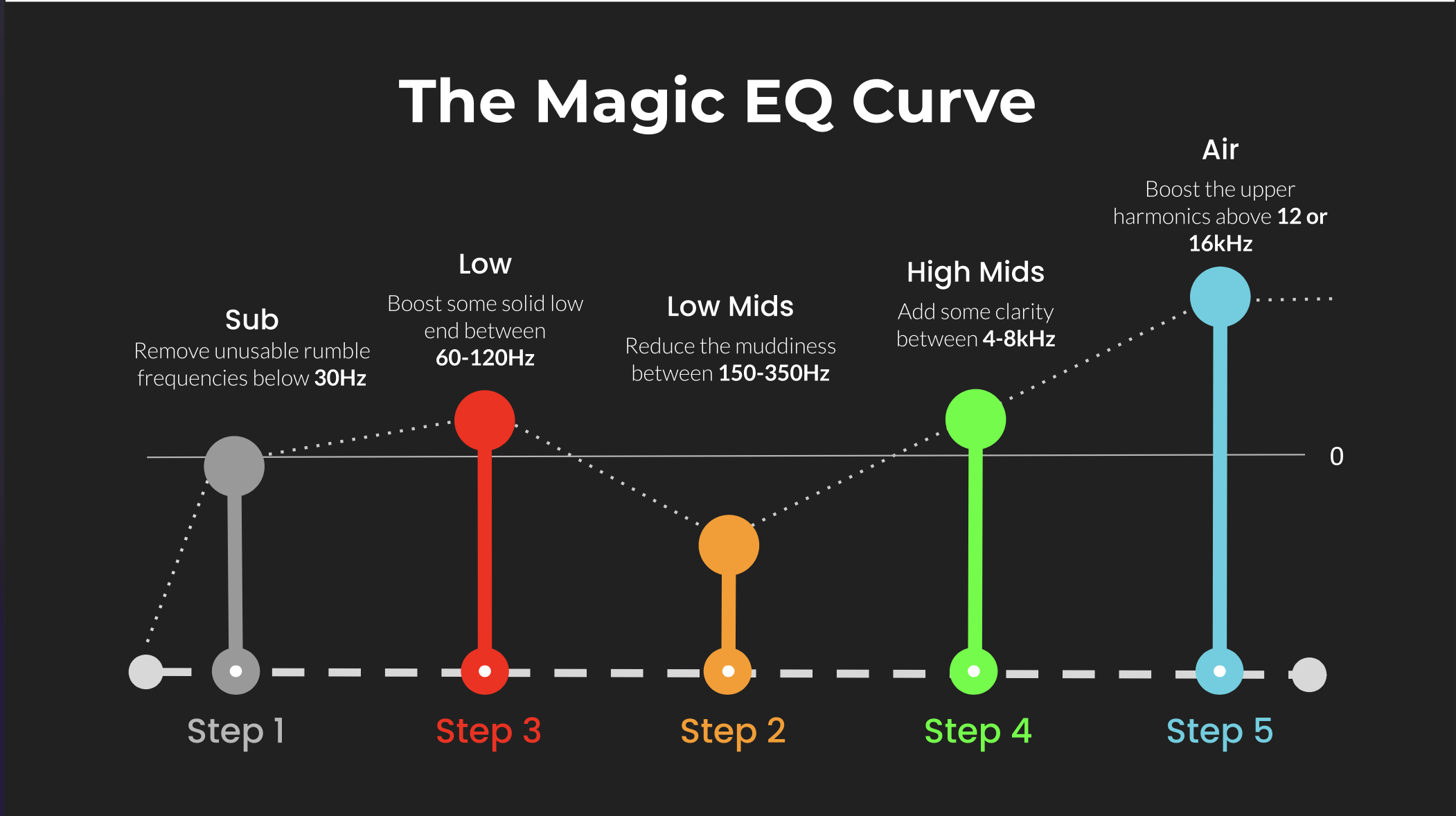 ⭐️ Download my Free Magic EQ settings Guide ⭐️

⭐️ Download my Free Magic Reverb settings Guide ⭐️
#protools #daw #homestudio #recordingschool #recording #musicproduction
Also read:
How to Start Your Own Online Business Teaching Music

Hey, I’m Futch – Music Production Coach and Ableton Certified Trainer

Learn how to make your first song and beat in Ableton Live with my
FREE 90-minute Ableton Live course
I’ve been teaching audio engineering and music production for 35 years.⭐️
Check out my new online music production program: Music Production Ninja…