

Learn how front-of-house engineers for Iron Maiden, Don Toliver, Miranda Lambert, and The Linda Lindas get album-quality live mixes
The age of analog mixing consoles and towering racks of outboard processors is long in the rear view. That’s especially true when it comes to the live sound world. From the largest stadium tours to the most humble of bars, bulky front of house rigs have been traded in for digital consoles and Dante-equipped setups.
With the introduction of Apollo x16D, it’s become easier than ever to bring the same time tested studio tools to a network based live sound solution. Here, we’ll walk you through the five favorite UAD plug-ins used by Iron Maiden, Don Tolliver, Miranda Lambert, and more.
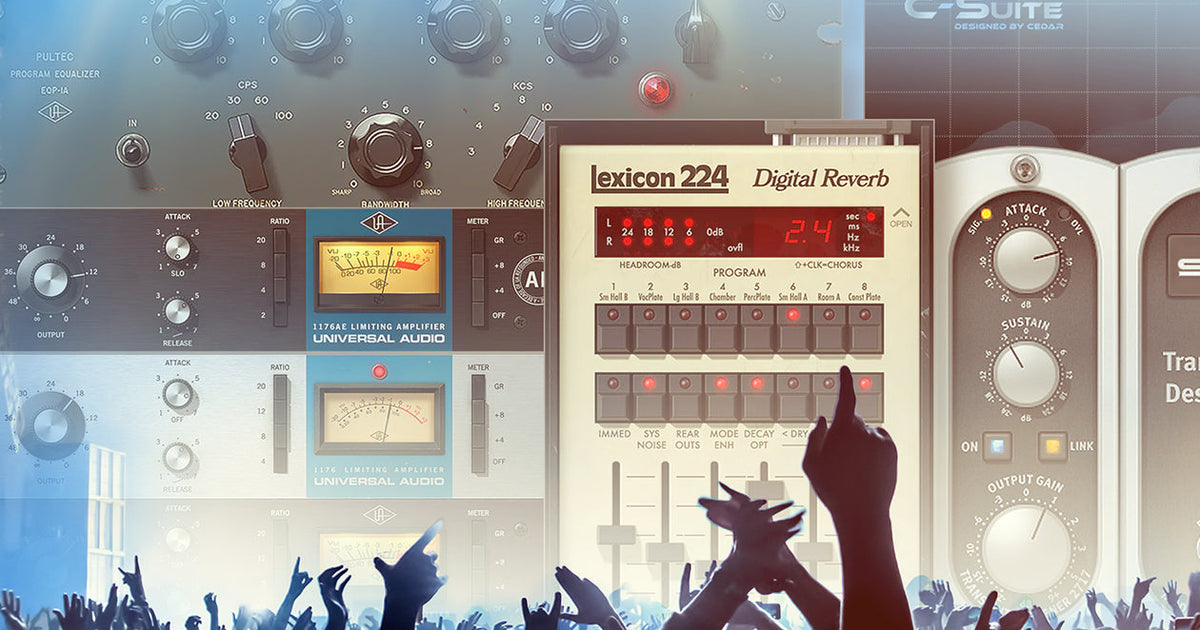
1. 1176 Classic Limiter Collection
The 1176 is the world’s most famous compressor for good reason. It’s the king of controlling quick transients and adds instantly recognizable tone n to any source. From subtle vocal leveling to smashed percussion and everything in between, the 1176 ise as versatile as it is iconic.
Unsurprisingly, the UAD emulation of these classic units can be heard on some of the largest stages no matter the genre. Front-of-house engineer Adam Labov uses the 1176 Classic Limiter Collection to add energy to the pop/punk guitars, vocals, and drums of The Linda Linda’s, while legendary FOH engineer John Buitrago uses them in his vocal chains to smooth out performances from hip-hop artists like Don Toliver and Lil Durk.
“I’ve worked with a lot of vintage hardware over the years — 1176 Compressors, Neve Preamps, EL8 Distressors — the UAD plug-ins sound like the real thing.”
Adam Labov, FOH for The LInda Linda’s
2. Pultec Passive EQ Collection

Every modern digital mixing console comes equipped with a fully featured and perfectly transparent equalizer accessible on each channel. The thing is, sometimes transparent equalization isn’t right for the job. When you need a colorful EQ with plenty of analog saturation and smooth sweeping curves, the Pultec Passive EQ Collection is the perfect option. Thanks to the original unit’s tube-driven design, they’re unbeatable when it comes to providing rich character both live and in the studio.
The EQP-1A is especially popular, adding weight to kick drums, bass guitars, or even entire mixes. For example, John Buitrago uses it every night on his master bus to add depth and drive to his mix. The MEQ-5 adds unique midrange cut and clarity to guitars and vocals, and the HLC-3 creates vintage filter effects with its own unique character.
“My master bus plug-in chain is always UAD plug-ins. It glues my live mixes together and gives it that final sheen.””
John Buitrago, FOH for Karol G, J Balvin, and Don Toliver
3. SPL Transient Designer

Drums and percussion can be difficult sources to get right in a live setting. Taming transients and/or resonance while maintaining punch is no small task, especially with more traditional expanders, compressors, and gates. Enter the SPL Transient Designer. With a dead simple interface featuring controls for attack, sustain, and output gain, it makes crafting the envelope of any sound incredibly easy.
This dynamic Swiss army knife is equally at home shaping pop percussion as it is adding punch to punk rock drums. Front-of-house engineer Todd Wines uses it to pump up toms for country music star Miranda Lambert, while Adam Labov uses it to add crack to The Linda Linda’s high energy kicks and snares.
“I am constantly using the SPL Transient Designer on toms.”
Todd Wines, FOH for Miranda Lambert
4. Lexicon 224 Digital Reverb

Adding space to a live mix is the key to creating a sense of depth and cohesion for the audience. Despite that, time based effects included in digital mixing consoles still often leave a lot to be desired. There are nearly endless outboard digital reverb options but few are more classic than the Lexicon 224 Digital Reverb. The original units come with five-figure price tags these days — luckily, the UAD version gives your live mixes the exact algorithms to the stage.
When the soaring vocals of Iron Maiden need a larger-than-life sense of space to match, Ken “Pooch” Van Druten uses the Lexicon 224 plug-in. By using a long pre-delay he maintains clarity while still allowing Bruce Dickinson’s iconic vocals to feel huge.
“I want clarity first, then the space opens up. So long pre-delays on the 224 — 80ms or more — keep the vocal intelligible.”
Ken “Pooch” Van Druten, FOH for Iron Maiden
5. C-Suite C-Vox Noise & Ambience Reduction

It’s no secret that most all venues are acoustically imperfect spaces, especially relative to carefully treated studio environments. Whether you’re mixing in a stadium, concert hall, or house of worship, you’re sure to battle unwanted natural resonance and room tone no matter the space. This is true for vocals most of all, as the least isolated and often quietest part of the mix. Especially next to a screaming guitar amp or over-excited drummer. Luckily, there’s a realtime UAD solution. The C-Suite C-Vox Noise & Ambience Reduction plug-in was originally designed for recording but perhaps is even more at home in a live environment. Given its ability to intelligently reduce ambient noise with near-zero latency, it’s a perfect companion for the stage.
This noise reduction powerhouse has found its way into the tool kit of many live engineers, but it’s proven especially powerful for the audio team Mt. Bethel Church. Not only do they use it on featured vocalists, but it also processes the choir, the minister’s mic, and even organ mics.
“Running the C-Vox Noise and Ambience Reduction plug-in gives me complete control over the room tone for all of my vocal mics.”
Taylor Cinnamon, Mt. Bethel Church streaming engineer
Thanks for reading! Thoughts? Comments? Let us know at uablog@uaudio.com
— Austin Lyons
Related Articles: