

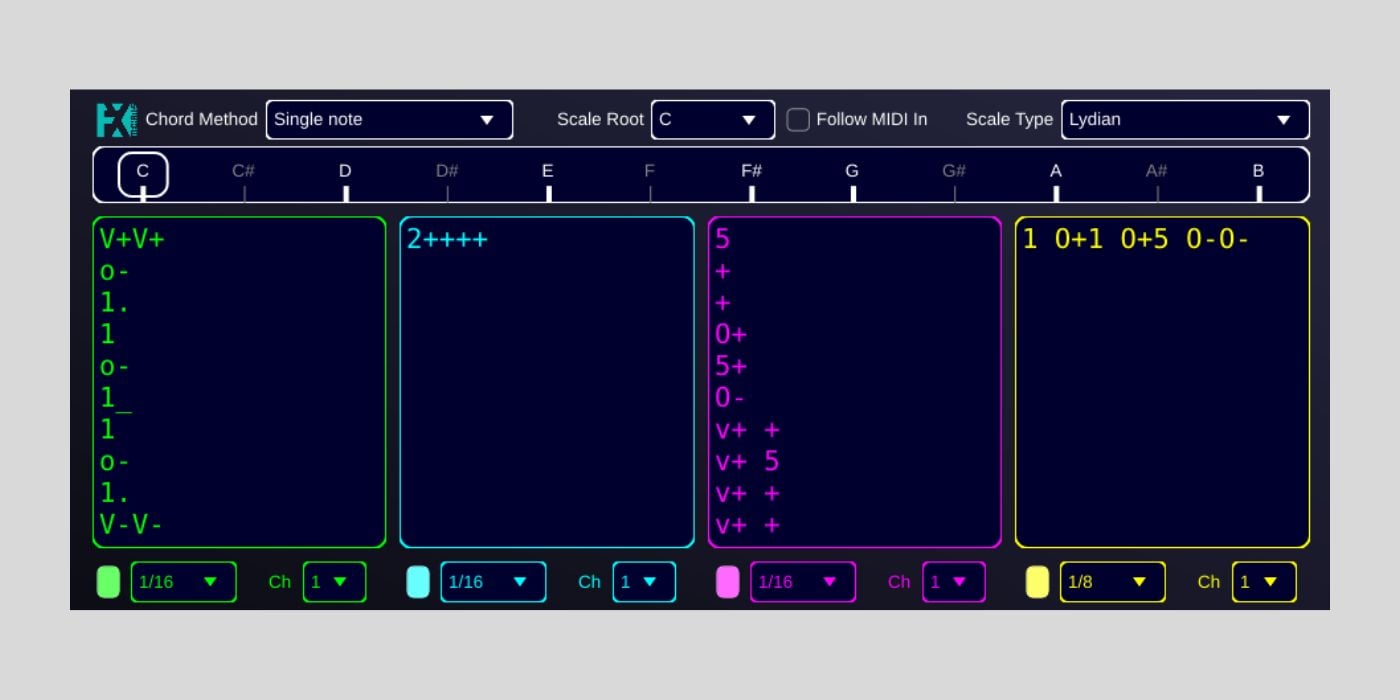

TeAr from FX-Mechanics is a free, advanced polyrhythmic and polyphonic arpeggiator featuring a text-based language system.
The plugin is available in VST/VST3 formats for Windows and Linux.
TeAr boasts four independent arpeggiator engines, each with dedicated pattern editors, and controls for subdivision and MIDI output channel. You can also turn engines on/off independently.
Four engines definitely offer significant potential for complex, layered polyrhythmic patterns.
The combination of the retro-futuristic interface and the sound/pattern used in the demo video immediately made me think of 80s movies like Weird Science. You know, when a TV computer from the 80s is doing futuristic and complex things at the drop of a hat.
Even if I can’t try TeAr on my Mac, I enjoyed that little flashback!
Mac users could try something like the free HY-MPS3 sequencer/arpeggiator by HY-Plugins.
TeAr’s four engines and polyphonic nature mean you can add various elements of harmony to your patterns.
Before getting into the text-based language system, you can adjust some fundamental settings.
TeAr is scale-aware, so it will perform within the boundaries of your selected scale and root note.
The list of available scales is extensive, including the basic scales/modes as well as some more exotic additions.
I’m happy to see the whole tone scale and octatonic scales (half/whole – whole/half) included. In modern, mainstream use today, the whole-tone scale is often limited to TV flashback/dream sequences, but it has incredible melodic and harmonic potential.
In addition to setting the root note, you can change it on the fly (via MIDI keyboard) with the Follow MIDI In mode.
If you take a look at the project’s GitHub page, you’ll find a complete guide for the text-based language system.
It includes text-based commands to modify notes/steps in various ways, including sustains, rests, and random note generation.
You can also adjust elements such as pitch and velocity per step.
Windows and Linux users, let us know how you get on with TeAr in the comments.
More:
Last Updated on January 14, 2026 by Tomislav Zlatic.