
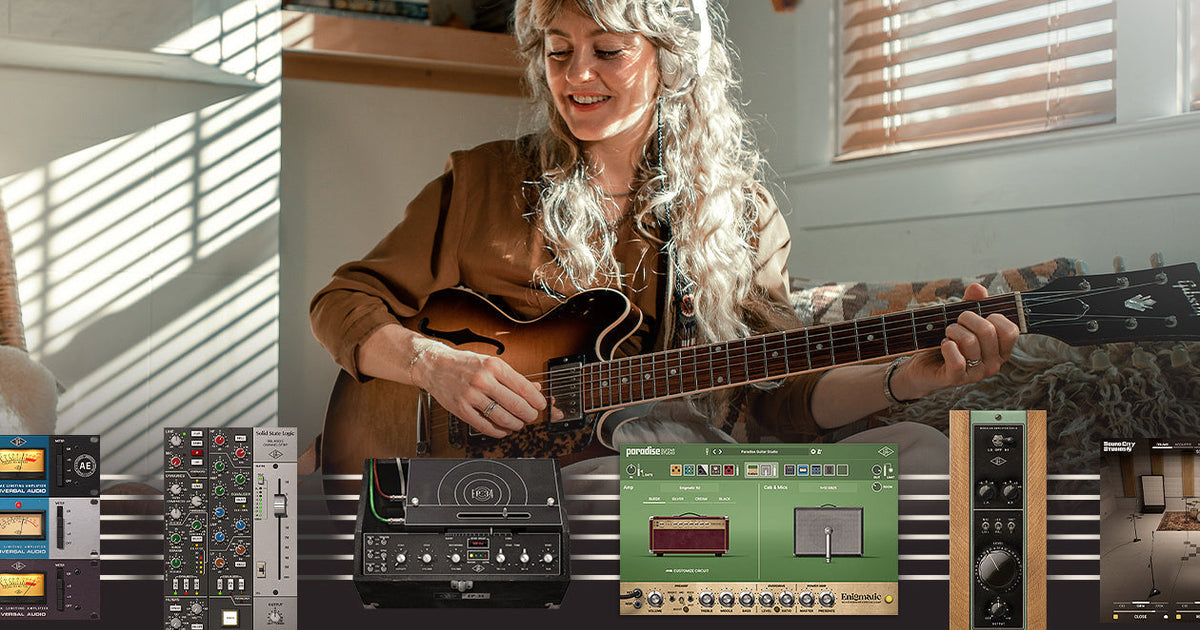

No amp? No worries. This is how to get incredible guitar tones right in your DAW.
Guitarists are known for chasing tone. And for good reason. In a live or studio environment, choosing the right effects and amplifier can mean the difference between a solo sitting perfectly in a mix, or getting lost behind other instruments.
Some players are wary of digital emulations and plug-ins. But even old school purists and session pros are discovering that amazing sounds can be achieved without amplifiers. So we put together a guide detailing what you need to know about tracking guitar using just a recording interface and plug-ins.
1. Use the Correct Input on Your Audio Interface
If you’re recording straight into your audio interface, you’ll want to use your Hi-Z input. These analog inputs are higher impedance than a line-level connection, meaning they are best for guitars with passive pickups. Using your Hi-Z in allows your direct signal to retain high frequencies and clarity.
When using an Apollo audio interface, your Hi-Z inputs are Unison-enabled. This means when you add Unison plug-ins to these channels in your DAW, you get the impedance and gain staging of the real gear. This interaction is key to recreating the feel and tone of vintage mic pres and guitar amp inputs.

If you have an Apollo audio interface, you can use preamp emulations like the UA 610-A or Neve 1073 plug-ins on Unison inserts to get classic analog warmth and saturation at your input.
2. Treat Plug-Ins Like Stompboxes
Since the earliest days of audio recording, guitarists have been adding effects to their signal chain. The first fuzz boxes introduced in the early 1960s were used by savvy producers and session guitarists to drive an amp’s front end for added saturation and sustain.
Recording with effects in your DAW is no different. Similar to using a traditional pedalboard in front of a real guitar amp, you can add various plug-ins before an amp emulation to sculpt your sound.
A fast compressor placed before an amp emulation can completely change how the amp reacts to your picking. An 1176 compressor is a classic choice. With your attack set around 4 to let initial transients through, and release set around 7 to add urgency and sustain, you can make a clean part feel more alive, or tighten up a high-gain tone.
Similarly, using an EQ plug-in before an amp emulation allows you to shape the front end. Try rolling off a bit of low end with an API 550A, or carving mids with a Pultec EQP-1A to keep your tone from feeling woofy. Boosting upper mids can give you a more aggressive distortion — almost like swapping to a different pickup, or kicking on your favorite boost.

A Teletronix LA-2A Tube Compressor before amp emulations gives you subtle leveling and dynamics control.
3. Choose the Right Amp Emulation
When recording or jamming with a real amp, you’re often limited to a single collection of sounds. Using digital amp emulation plug-ins could not be more different.
If you’re prone to option paralysis, plug-ins like UAD Paradise Guitar Studio may look a bit daunting at first. But these styles of amp emulation plug-ins often include carefully curated presets to make it easier to find the tone you envision.
Paradise is built upon classic tube amp models that have been used on countless iconic recordings. Amps like the Dream ’65 Reverb and Showtime ’64 are perfect for clean to slightly overdrive tones. When you need more edge, the Ruby ’63 Top Boost or Lion ’68 Super Lead deliver that familiar midrange bite that’s perfect for classic rock or punk sounds.

Paradise Guitar Studio gives you vintage amps, pedals, and studio effects all in a single plug-in.
The effects included in Paradise are super easy to dial in. Classic overdrive effects like Nashville Overdrive and Vintage Fuzz can add even more sustain to a pushed amp. While reverbs like the Spring 65 and Plate 140 let you place the guitar in a space quickly. If you want to get weird — effects like the EP-III Tape Echo, Analog Memory Delay, and Orange Phaser provide wonderful vintage textures.
Having access to this kind of curated setup makes it easy to move between tones without breaking your workflow. You can track clean parts, layer power chords, or cut lead lines using different amp and effect combinations. And without needing to physically change setups, you’ll stay focused on the performance.
Going digital isn’t about replacing your tone. It’s about unlocking it.
4. Shape Your Final Sound with Studio Effects
In a traditional tracking set up, many guitarists disregard their tone after it leaves the speaker and enters a microphone. But there’s so much more you can do to improve your sound when using just plug-ins.
Since most amp tones can benefit from a little sculpting, using an EQ like the Manley Massive Passive EQ with a gentle high-pass filter can remove unwanted low-end rumble. The SSL 4000 E-Channel EQ is a classic choice if you need to carve out some midrange in a dense mix. For subtle high-frequency sheen, a light touch from the Maag EQ4 air band can add clarity and openness.
When using compression, the goal is never to squash the performance. The Shadow Hills Mastering Compressor in optical mode can add the perfect amount of glue and sustain. For punchier rhythm parts, the Neve 33609 Compressor/Limiter can give you some added harmonic richness and midrange control.
To help guitars blend naturally into the mix, reverb and delay effects are the final ingredient. The Lexicon 224 Digital Reverb is a classic — just a touch can help your leads stick out. If natural room reverb is your thing, the Ocean Way Studios Deluxe is great for rhythm stacks.

A gentle touch of ambiance from a plug-in like Hitsville Reverb Chambers can go a long way to add stereo width to a clean or lightly overdriven tone.
Some Final Tips to Bring it all Together
Going digital isn’t about replacing your tone, it’s about unlocking it. From the right preamp and effects to thoughtful post-processing, every step shapes your sound. Tools like Paradise Guitar Studio let you explore tones freely, keeping the focus on playing, instead of gear.
Remember to experiment, trust your ears, and never be afraid to push boundaries. Whether chasing sparkling cleans, crunchy rhythms, or soaring leads, these tools are meant to unlock your creativity.
— Austin Lyons
UAD plug-ins mentioned in this article:
Related articles: