



Compression Isn’t Math. It’s Control.
Most explanations of compression sound like a physics lecture.
Threshold.
Ratio.
Attack.
Release.
All technically correct.
All emotionally useless.
Here’s a better way to understand compression:
Compression is what happens when you try to wrestle something that doesn’t want to be controlled.
Vocals.
Bass.
Drums.
They’re all wild animals.
Compression is how you keep them from tearing the mix apart.
Quick Summary
👉 Compression controls dynamic range by reducing the difference between loud and quiet sounds. Think of it like wrestling a wild animal — not to crush it, but to guide its energy.
Before compression, your signal is unpredictable.
That’s a wild animal.
You don’t want to kill it.
You don’t want to tame it completely.
You want cooperation.
Compressor vs Limiter: What’s The Difference?
The threshold is the moment the animal gets aggressive.
Below the threshold?
It’s calm. You let it be.
Above the threshold?
It lunges — and you grab on.
Lower threshold = you engage sooner
Higher threshold = you engage only when it gets wild
This is deciding when to wrestle.
The 4 Main Audio Compressor Types & 4 Iconic Compressors 🎛️
The ratio is how tight your grip is.
Higher ratio = less movement allowed
Lower ratio = more freedom
Too tight and the animal loses life.
Too loose and it escapes.
⭐️ Download my Free Guide: The Magic Compressor Settings that work on EVERYTHING!! ⭐️
The attack is your reflex time.
Fast attack:
Slow attack:
Attack decides whether the animal feels dangerous or disciplined.
The Magic Compressor Settings that work on Everything
The release is when you loosen your grip.
Fast release:
Slow release:
-
steady control
-
smoother sound
-
more consistency
Auto-release:
Release shapes the rhythm of compression.
After wrestling, everything’s quieter.
So you lift the level back up.
Makeup gain isn’t making it louder —
it’s making it present again, now under control.
The animal didn’t disappear.
It just learned boundaries.
Mastering Compression: A Guide to Using a DAW Compressor
Vocals
-
unpredictable
-
emotional
-
sudden spikes
Gentle, consistent control works best.
Bass
-
heavy
-
powerful
-
easily overpowering
Firm grip. Slow movements.
Drums
-
explosive
-
transient-heavy
Sometimes you grab hard.
Sometimes you let them hit.
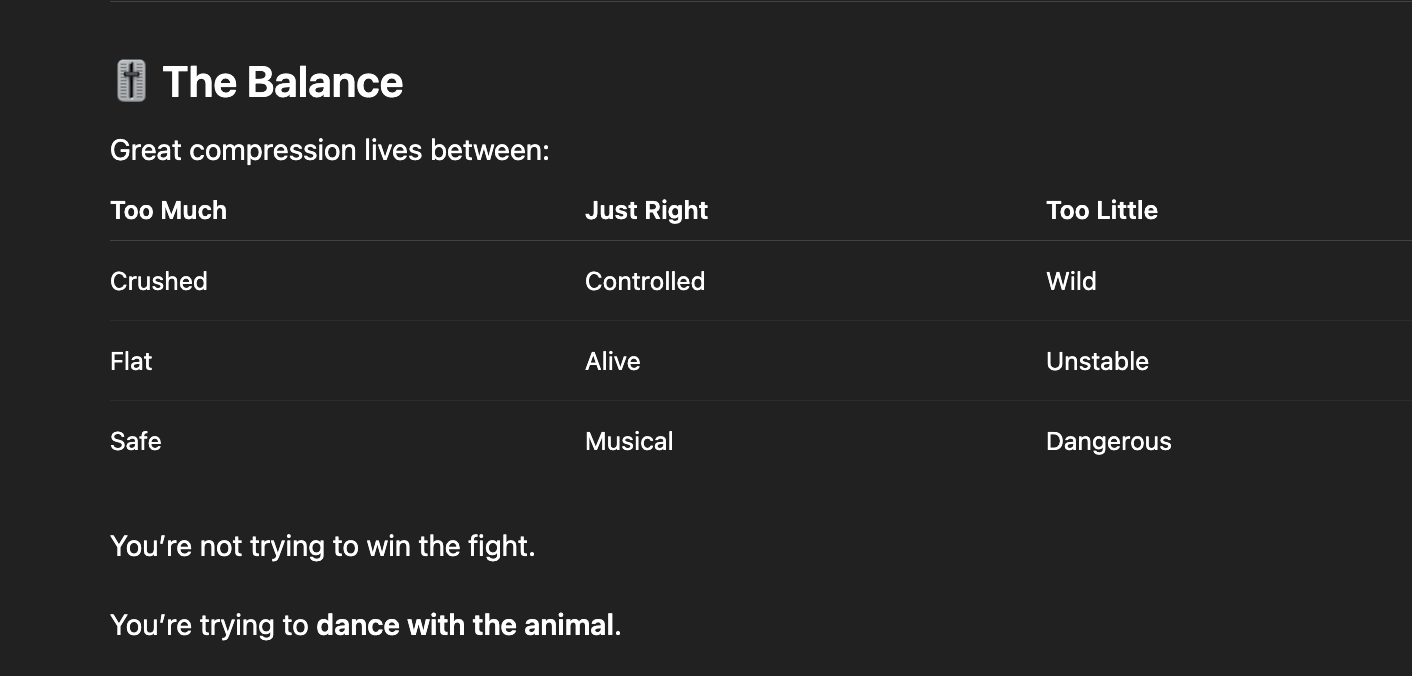
Too much compression feels like:
-
lifeless sound
-
no dynamics
-
constant pressure
-
fatigue
That’s not control.
That’s domination.
Music doesn’t want domination.
It wants direction.
Too little compression feels like:
-
parts jumping out
-
inconsistent levels
-
messy energy
-
lack of focus
That’s not freedom.
That’s chaos.
 ⭐️ Try my FREE Ableton Live Course. Learn Ableton Live in 90 Minutes!
Q: Should I hear compression working?
A: Sometimes — but usually you feel it more than hear it.
Q: Is compression always necessary?
A: No. Some animals behave just fine.
Q: Why does compression feel confusing?
A: Because it’s reactive — it only shows itself when something happens.
Once you stop thinking of compression as numbers, everything clicks.
Compression isn’t about making things smaller.
It’s about making them behave.
When you learn how to wrestle without crushing, your mixes get tighter, louder, and more emotional — without losing their edge.
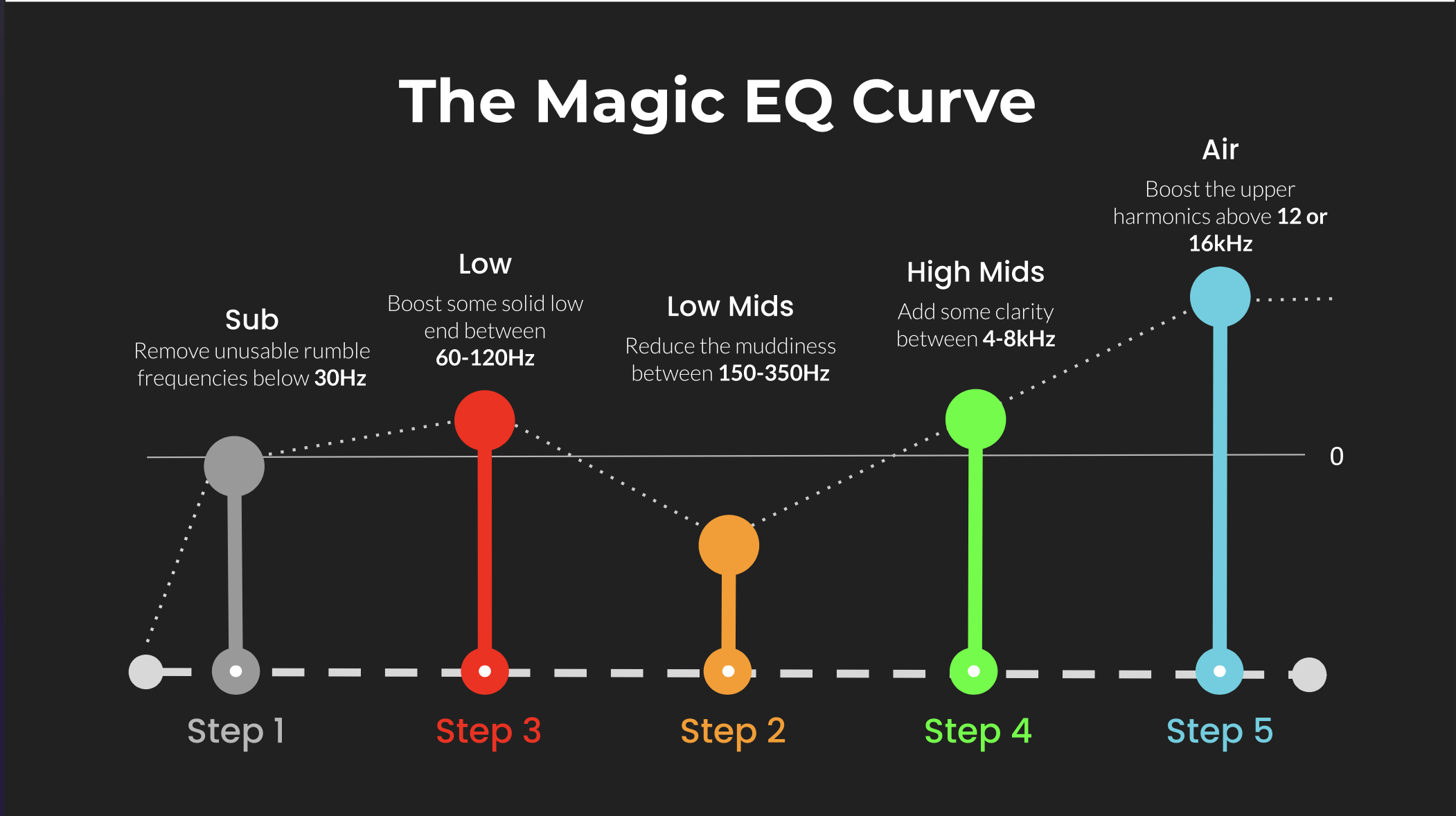 ⭐️ Download my Free Magic EQ settings Guide ⭐️

⭐️ Download my Free Magic Reverb settings Guide ⭐️
#protools #daw #homestudio #recordingschool #recording #musicproduction
Also read:
How to Start Your Own Online Business Teaching Music

Hey, I’m Futch – Music Production Coach and Ableton Certified Trainer

Learn how to make your first song and beat in Ableton Live with my
FREE 90-minute Ableton Live course
I’ve been teaching audio engineering and music production for 35 years.⭐️
Check out my new online music production program: Music Production Ninja…