

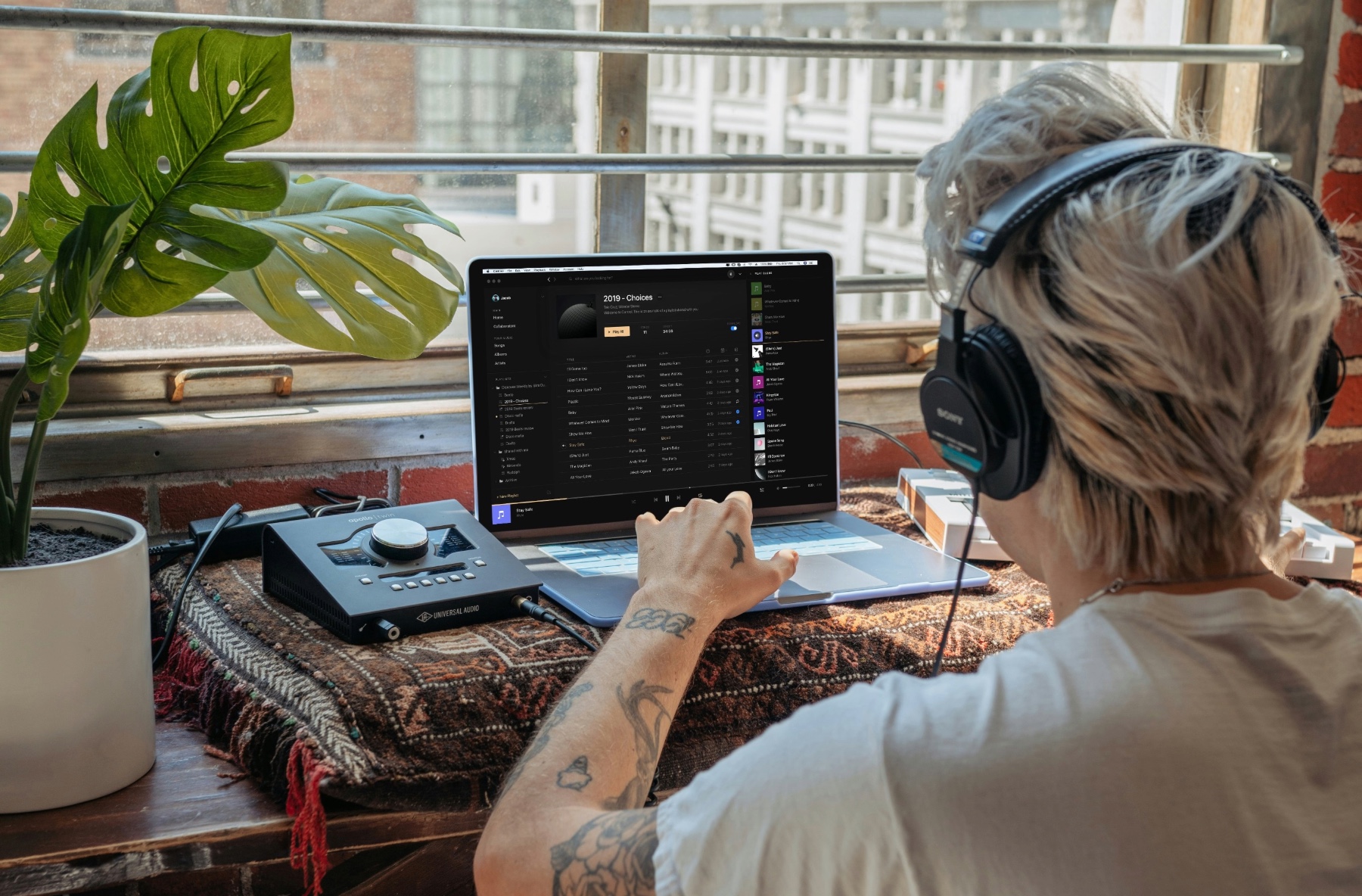

Mixing can be surprisingly deceptive. After listening to the same track for hours, it’s easy to lose perspective on what actually sounds good. Your ears adapt, small problems start to feel normal, and before long you’re making decisions based on habit rather than reality.
This is especially common in home studios. Untreated rooms, headphones, and smaller speakers don’t always give you a full or accurate picture of your mix. As a result, producers often overdo the low end, push vocals too far forward, or make mixes overly bright without realising it.
Reference tracks solve this problem. They give you an external point of comparison, helping you judge balance, tone and clarity against professionally mixed music. Instead of guessing whether your mix is too bass-heavy or too dull, you can check it against a trusted benchmark.
Using reference tracks isn’t about copying someone else’s sound. It’s about keeping your ears grounded and your decisions consistent. When used properly, references act like a reality check, helping you make better mix choices faster and with more confidence.
What Are Reference Tracks?
A reference track is a professionally mixed and released song that you use as a benchmark while working on your own mix. It gives you something concrete to compare against when making decisions about balance, tone and space.
It’s important to separate mix references from inspiration tracks. Inspiration tracks influence the creative direction of a song, while reference tracks help you evaluate technical elements like low end, vocal level and overall clarity. The two can overlap, but they serve different purposes.
Reference tracks are not about copying another mix. Every song is different, and trying to match a reference exactly often leads to frustration. Instead, references provide context. They help you understand what “finished” sounds like in your genre and how professional mixes behave on real-world systems.
Most experienced engineers rely on references, even after years of mixing. They use them to reset their ears, confirm decisions and avoid drifting too far in one direction. For beginners, reference tracks are even more valuable because they offer a clear target to learn from.
Tip:
A good reference track should sound great on many systems, not just one set of speakers or headphones.
How Reference Tracks Improve Your Mix

Using reference tracks consistently can transform the way you approach mixing. Instead of working in isolation, you’re constantly checking your decisions against a professional standard. This leads to clearer, more balanced mixes that translate better across different listening systems.
Better tonal balance
Reference tracks help you judge whether your mix is too bright, too dark, too muddy or too thin. By comparing overall tone, you can spot problems that are easy to miss after long sessions.
More controlled low end
Low frequencies are one of the hardest parts of mixing, especially in home studios. Reference tracks give you a reliable point of comparison for how loud the kick and bass should feel relative to the rest of the mix, helping you avoid boomy or weak low end.
Clearer vocal placement
Vocals often end up either buried or overly loud. References make it easier to hear where the vocal should sit in relation to drums, bass and instruments, especially in your genre.
Improved stereo width and depth
By listening to how wide professional mixes feel and how reverbs are used, you can better judge panning, spatial effects and depth in your own track.
Better translation across systems
A mix that sounds good only in your studio isn’t finished. Reference tracks help you create mixes that hold up on headphones, car speakers, phones and club systems.
Tip:
If your mix sounds very different from a reference at low volume, it’s a sign that balance issues need attention.
Choosing the Right Reference Tracks

Not all reference tracks are useful. Choosing the right ones makes the difference between helpful guidance and confusing comparisons.
Stay within the same genre and vibe
Your reference should be stylistically close to your track. A pop reference won’t help much when mixing techno, and a trap reference won’t translate well to acoustic music. Genre expectations matter, especially for low end, vocal level and brightness.
Match energy and arrangement
Choose references with a similar tempo, density and energy. Comparing a sparse verse to a fully stacked chorus from another song can lead to misleading conclusions. The closer the arrangement, the more useful the comparison.
Use professionally mixed and released tracks
Stick to commercially released music from artists known for good production. These tracks have already passed multiple quality checks and are designed to translate well across systems.
Limit the number of references
Using too many reference tracks can be overwhelming. One to three well-chosen references is usually enough. This keeps your decisions focused and prevents you from chasing multiple, conflicting targets.
Know why you’re using each reference
Some references are great for low end, others for vocal clarity or overall tone. Being clear about what you’re listening for makes references far more effective.
Tip:
Build a small personal reference library for each genre you work in. Reusing familiar references helps train your ears faster over time.
What to Listen for When Using Reference Tracks

Reference tracks are most useful when you know exactly what you’re listening for. Instead of comparing everything at once, focus on specific elements of the mix and how they behave in a professional production.
Low-end balance
Listen to the relationship between the kick and bass. Notice which one feels more dominant and how clean the low end stays. Pay attention to how tight or extended the sub frequencies feel rather than how loud they are.
Vocal level and clarity
Compare how present the vocal feels in the reference. Is it sitting just above the instruments or clearly on top? Listen for how consistent the vocal level stays throughout the song.
Overall brightness
Notice how bright the reference mix feels without sounding harsh. This can help you judge whether your mix needs more high-end clarity or if it’s already too sharp.
Depth and reverb
Listen to how space is created. Are reverbs subtle or obvious? Do delays add width without clutter? Reference tracks often use less reverb than expected, relying on balance instead.
Stereo width and panning
Pay attention to how wide the mix feels and where key elements are placed. Notice what stays centred and what’s spread out to create space.
Dynamics and punch
Listen to how energetic the mix feels at low volume. A well-balanced mix should still feel punchy and clear even when played quietly.
Tip:
Switch between your mix and the reference at the same volume. Loudness differences can hide real balance issues.
How to Use Reference Tracks in a Mixing Session

Knowing when and how to use reference tracks is just as important as choosing the right ones. Used properly, they guide decisions without interrupting your workflow or second-guessing every move.
Level-match your references
Commercial tracks are mastered and much louder than your mix. If you compare them at full volume, your mix will always feel weaker. Turn the reference down so it matches the loudness of your mix. This makes comparisons fair and far more useful.
Switch often, but briefly
Jump between your mix and the reference regularly, especially after making changes. Short comparisons work best. Listening too long can cause ear fatigue and confusion rather than clarity.
Use references as checkpoints, not rules
Check your low end, vocal balance or brightness against the reference, then return to your mix and make adjustments. Avoid constantly A/B-ing every decision. References should guide, not control, your process.
Listen at low volumes
Quiet listening reveals balance problems quickly. If the reference still feels clear and punchy at low volume but your mix doesn’t, that’s a sign something needs adjusting.
Compare sections that match
Verse to verse, chorus to chorus. Comparing different energy levels can lead to incorrect conclusions about balance and dynamics.
Avoid reference fatigue
If you find yourself endlessly comparing without making progress, take a break. References are most effective when your ears are fresh.
Tip:
Use reference tracks at the start of a session to reset your ears, then again near the end to confirm your mix is on the right track.
Common Mistakes When Using Reference Tracks

Reference tracks are incredibly useful, but only when they’re used correctly. A few common mistakes can make them confusing or even harmful to your mixing process.
Chasing loudness instead of balance
One of the biggest mistakes is comparing your unmastered mix directly to the loudness of a mastered reference. This often leads to over-compression or pushing levels too hard. Always focus on balance, tone and clarity, not volume.
Using references outside your genre
A great-sounding track in another genre won’t necessarily help your mix. Different styles have different expectations for bass, vocals and brightness. Stick to references that make sense for your sound.
Comparing everything at once
Trying to match EQ, low end, width and depth all at the same time can feel overwhelming. Focus on one area at a time. References work best when used with intention.
Switching references too often
Constantly changing reference tracks can lead to mixed signals. Each professional mix makes different choices. Using too many references at once makes it harder to commit to decisions.
Over-analysing instead of mixing
Reference tracks are tools, not instructions. If you find yourself endlessly comparing without making changes, step back and trust your ears.
Tip:
If your mix improves every time you check a reference, you’re using them correctly. If it gets worse, simplify your approach.
Reference Tracks as a Learning Tool

Beyond improving individual mixes, reference tracks are one of the best ways to train your ears over time. The more you compare your work to professional mixes, the better you become at recognising balance, clarity and genre standards without needing to guess.
Regular use of reference tracks helps you understand what listeners expect in different styles of music. You start to notice patterns in how loud vocals sit, how controlled the low end feels, and how little processing is often needed when balance is right. These insights carry over into every mix you work on.
References also build confidence. Instead of second-guessing decisions, you can make informed choices based on real-world examples. Over time, you’ll rely less on constant comparison because your ears become calibrated to professional standards.
Used consistently, reference tracks don’t just improve mixes. They improve decision-making, speed and confidence as a producer.
Learn to mix with reference tracks

Learning to mix with reference tracks is a core part of the professional production workflow. At pointblank, students develop critical listening skills through guided mix sessions, real-world comparisons and hands-on projects that mirror industry practice. By working with reference tracks in both studio and online environments, students learn how to create balanced mixes that translate effectively across various systems.
Whether you’re studying Music Production or Sound Engineering in London, LA, or Online, pointblank helps you build the skills needed to mix with clarity, confidence and consistency. Explore our courses and start improving your mixes using the same techniques professionals rely on every day.
Inspired?
Thanks to the dedication of our industry expert instructors, pointblank has earned a prestigious Gold rating in the Teaching Excellence Framework (TEF), placing us among the very best institutions. Whether you’re passionate about DJing, music production, sound engineering, vocal performance, software engineering, radio, or songwriting, pointblank offers degrees or short courses in London, LA, Ibiza, and Online. No matter your location or aspirations, we are here to help make your dreams a reality.
Register to Access Free Courses, Plugins, Projects, Samples & More
Create a pointblank account with the orange button below and visit our Free Stuff page to get your hands on a range of free courses, exclusive music-making tools, and tutorials provided by the team.